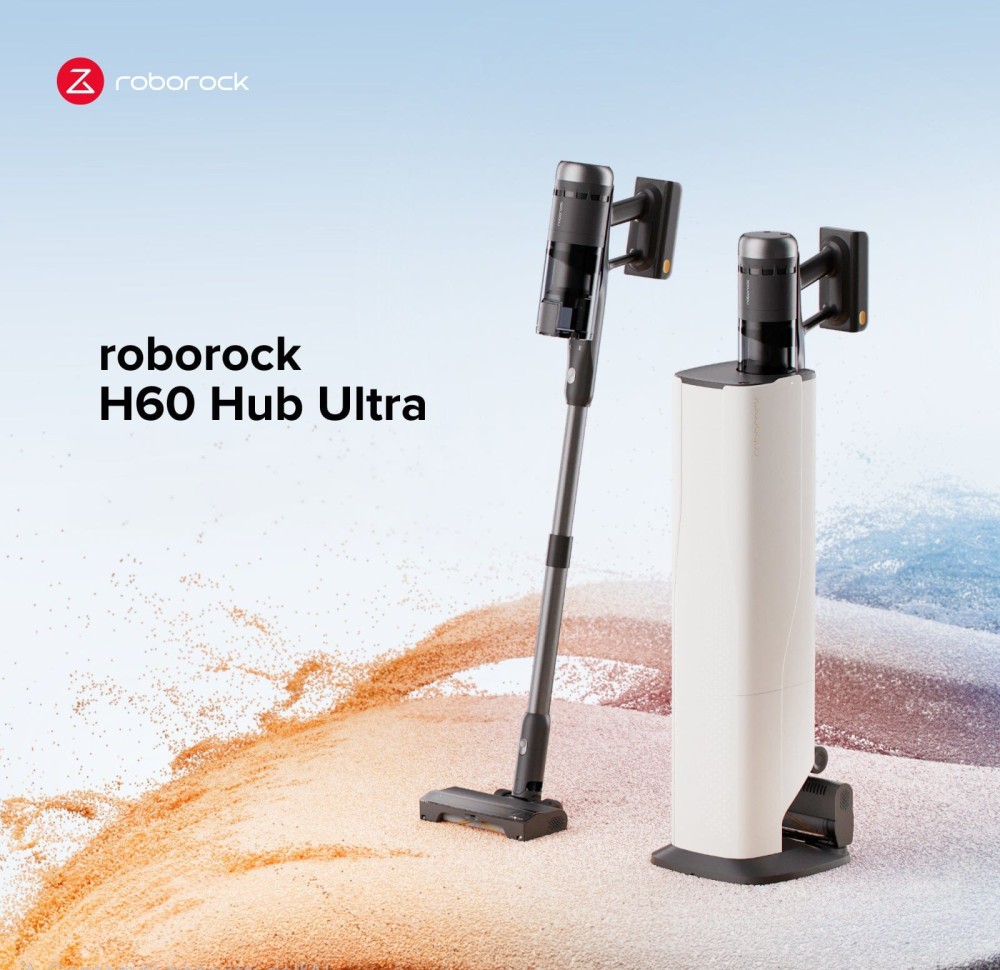
There are two types of cordless vacuum cleaners: those that clean your home, and those that inevitably make you clean them. With the Roborock H60 Hub Ultra, I immediately had the feeling that the goal was precisely to reduce to a minimum the two most common annoyances, constantly emptying the bin by hand and untangling hair and pet fur from the roller. It’s one of those promises that sounds good on paper, but here it’s backed by a clear design logic: a system built to be fast, tidy, and as automated as possible.
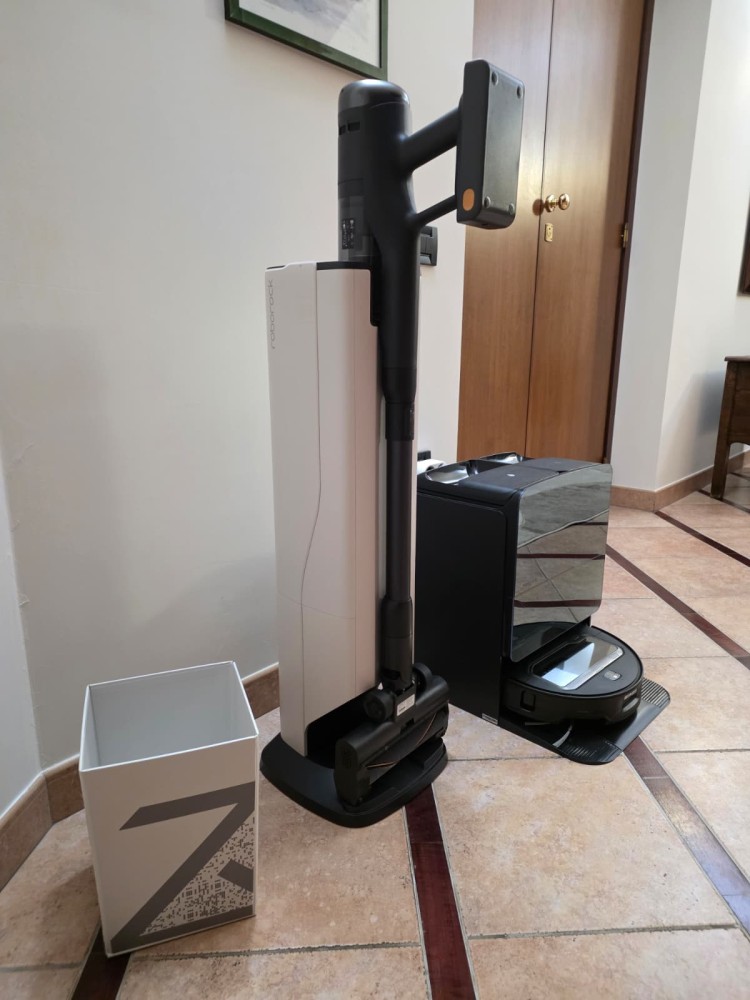
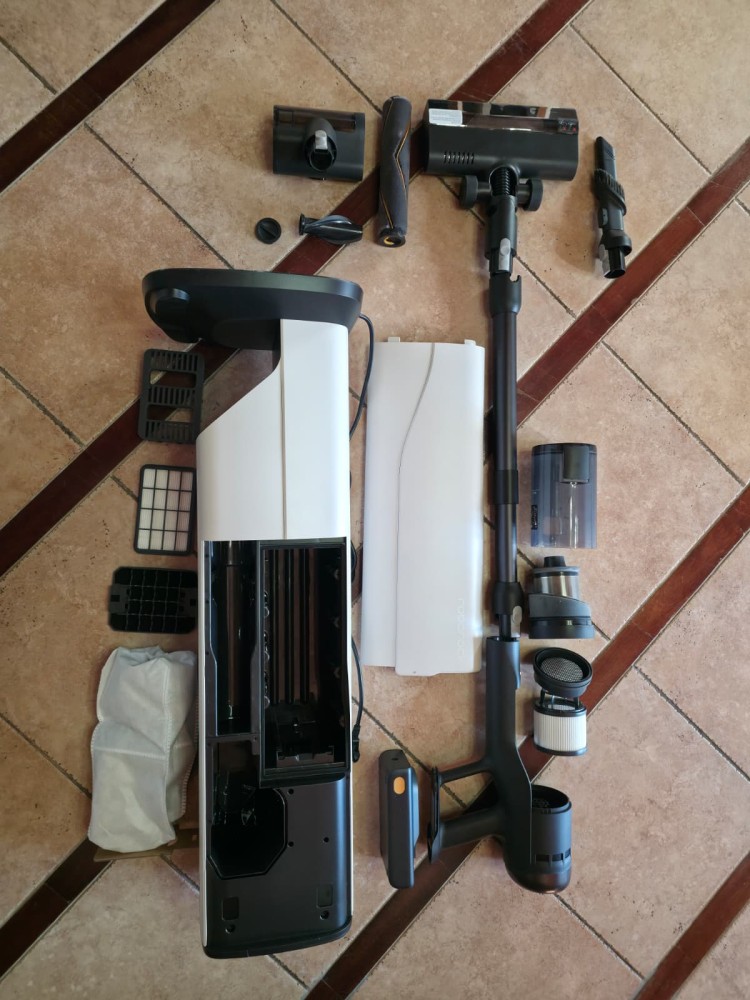
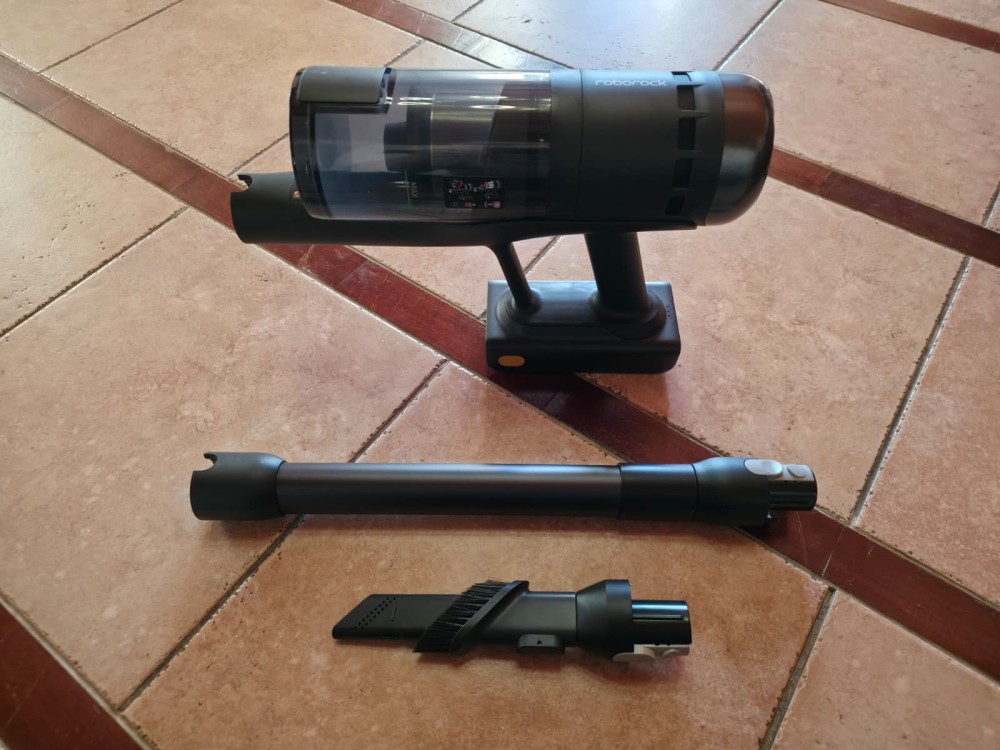
Accessories in the box: dock with pre-installed dust bag, main body, telescopic tube, floor brush, mini motorized brush, 2-in-1 crevice tool, extra bag, and manual.
Auto-emptying dock: why it’s the real “experience changer”
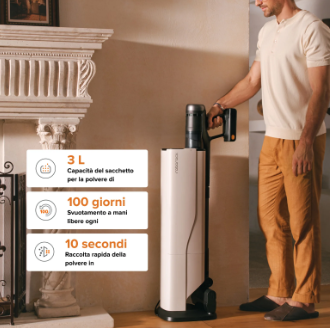
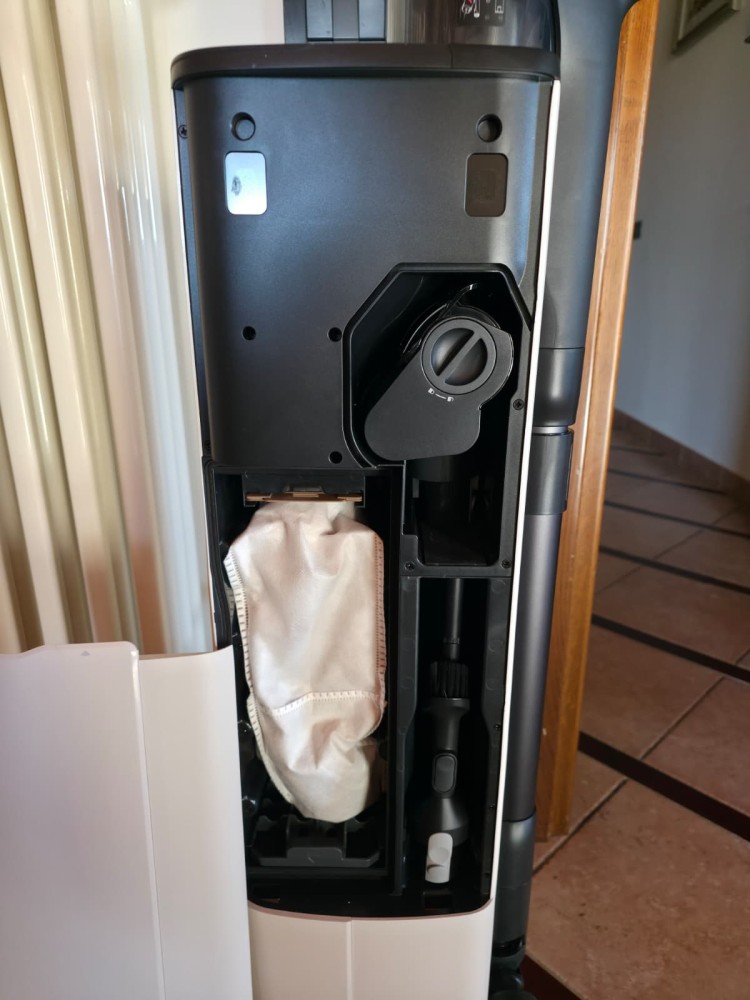
The dock is the element that turns the H60 Hub Ultra from a “good cordless” into a product focused on everyday convenience. In addition to acting as a charging base, it performs two key functions: it automatically empties the stick’s dustbin by transferring debris into the 3-L bag, and it recharges the unit. A full charge, as mentioned, takes roughly between 3 hours and 15 minutes and 3 hours and 30 minutes. It’s not fast charging, but it’s consistent with the category, and above all, it’s fully automatic: you dock it and you’re done.
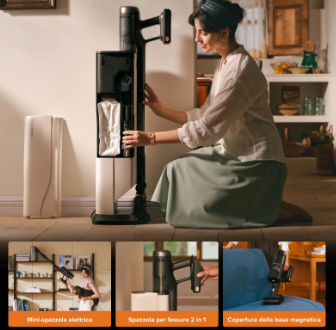
There’s also a detail that’s often underestimated but very important in real-world use: the dock is designed to store the mini motorized brush and the 2-in-1 crevice tool in an orderly, practical, and “clean” way, meaning no accessories left in sight or scattered around the house. The idea is a system that remains compact (84.8 × 28.9 × 28.9 cm), discreet, with accessories close at hand but integrated and invisible. A real advantage if the vacuum lives in a hallway or living area.
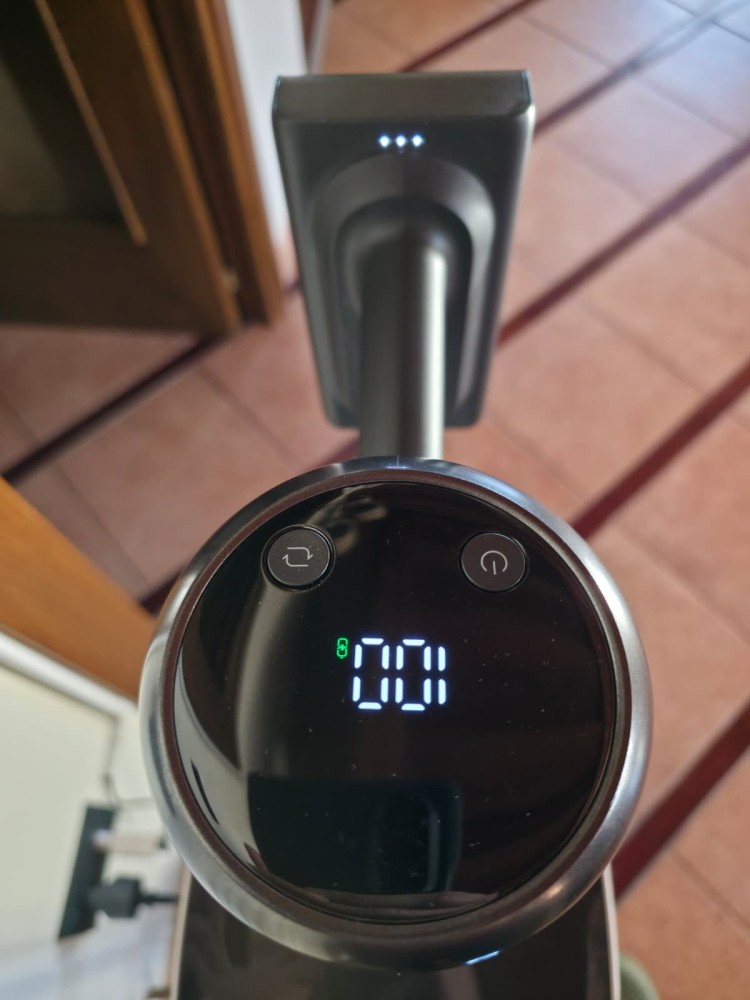
Use on hard floors and carpets: where does it perform best?
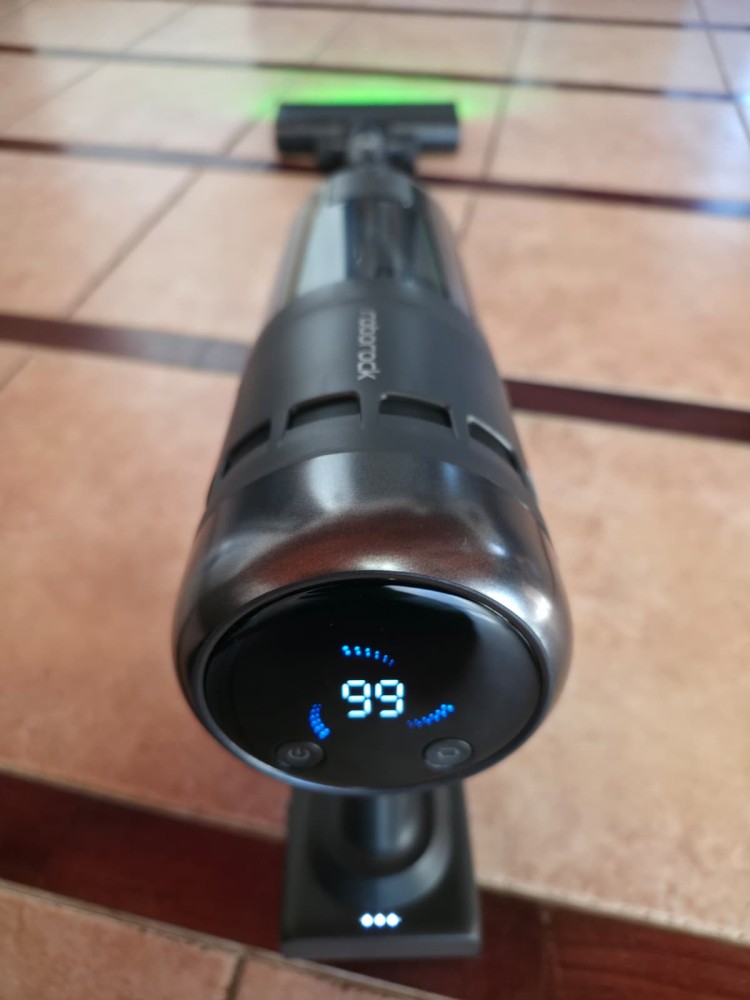
On hard floors, the H60 Hub Ultra plays on its home turf. In these conditions, airflow, good head sealing, and the ability to channel dirt and dust toward the intake without scattering it matter most, and here the performance is very convincing.
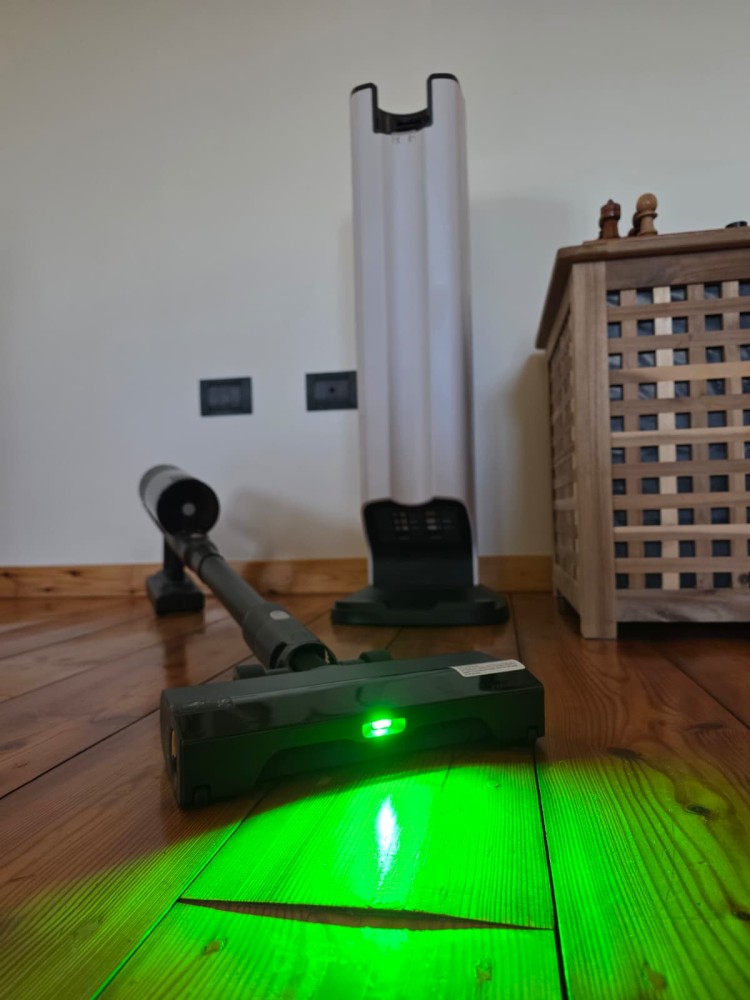
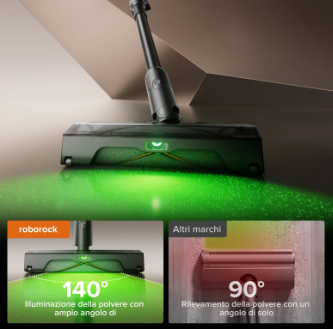
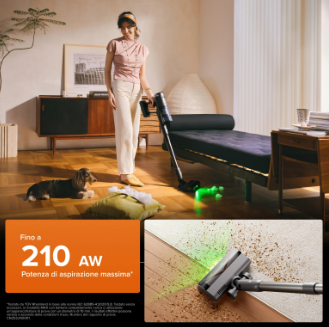
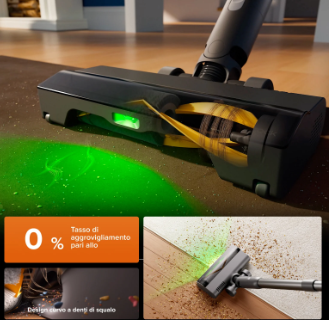
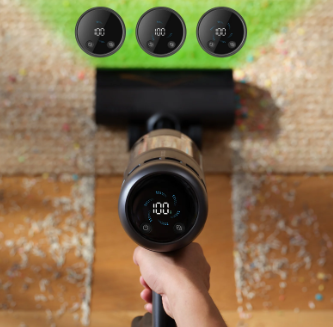
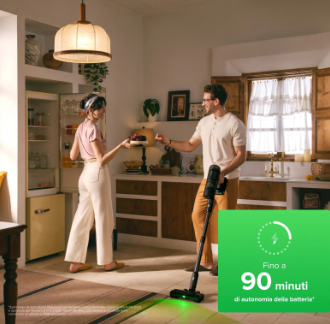
The floor head integrates a green light with a 140° angle that highlights dirt far better than many competitors. This technology is worth explaining properly: it’s not just a simple front light, but illumination designed to reveal fine dust, hair, and pet fur through contrast and micro-shadows. In practice, you can see dirt even where it looked clean to the naked eye. Especially if you clean in the evening or on dark floors, it really helps avoid leaving residue behind.
On carpets, however, a different dynamic comes into play. Here it’s not enough to just “pull”: the head needs to agitate the fibers and release embedded dirt. With thin, low-pile rugs, results are generally good; with thicker, high-pile carpets, the brush design doesn’t beat or detangle the fibers enough. Performance depends on the carpet type, and this is one of the few real weak points I found.
In terms of weight and size, we’re looking at about 1.8 kg for the main body and roughly 2.6 kg in the complete configuration with tube and motorized brush. Approximate dimensions are 114.6 × 25 × 29.3 cm.
It’s light, easy to maneuver and carry, well balanced, and features a telescopic tube that can be extended as needed to suit different heights. An extra touch would have been a swivel joint like the versions without the Hub.
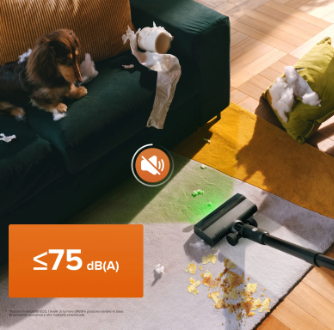
The declared noise level reaches up to 75 dB in MAX mode. Overall it’s generally quiet and doesn’t bother our ears, or those of our pets.
Performance and technologies: what they mean and how it differs from other cordless vacuums
The “210 AW” figure matters because Air Watts indicate, in simplified terms, the useful work the vacuum can do by combining airflow and suction. Put plainly: it’s not just how hard it pulls, but how effectively it can sustain airflow at the nozzle and head. It’s a good indicator of power, even though final performance depends heavily on the head design.
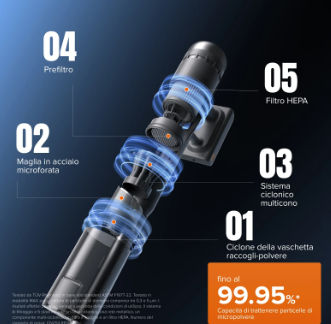
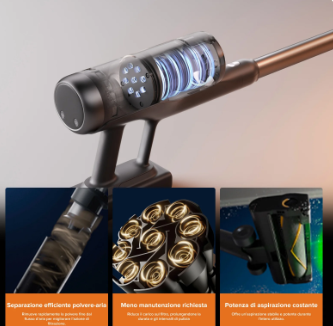
The 9-cyclone separation system is another important feature. Cyclonic separation uses centrifugal force to deposit heavier particles before they reach the filters. The practical benefit is twofold: reduced filter clogging and more stable performance over time.
The 5-stage filtration system (plus the one in the dock) should be read in terms of hygiene and air quality. In a well-designed system, each stage acts as a progressive barrier: larger debris first, then fine dust, and finally the densest filter. The reference to 0.3 μm is a classic in domestic filtration, it’s considered a critical size because it’s among the hardest to capture. For the user, this mainly means fewer fine particles released back into the environment, which is especially relevant for people with allergies or pets.
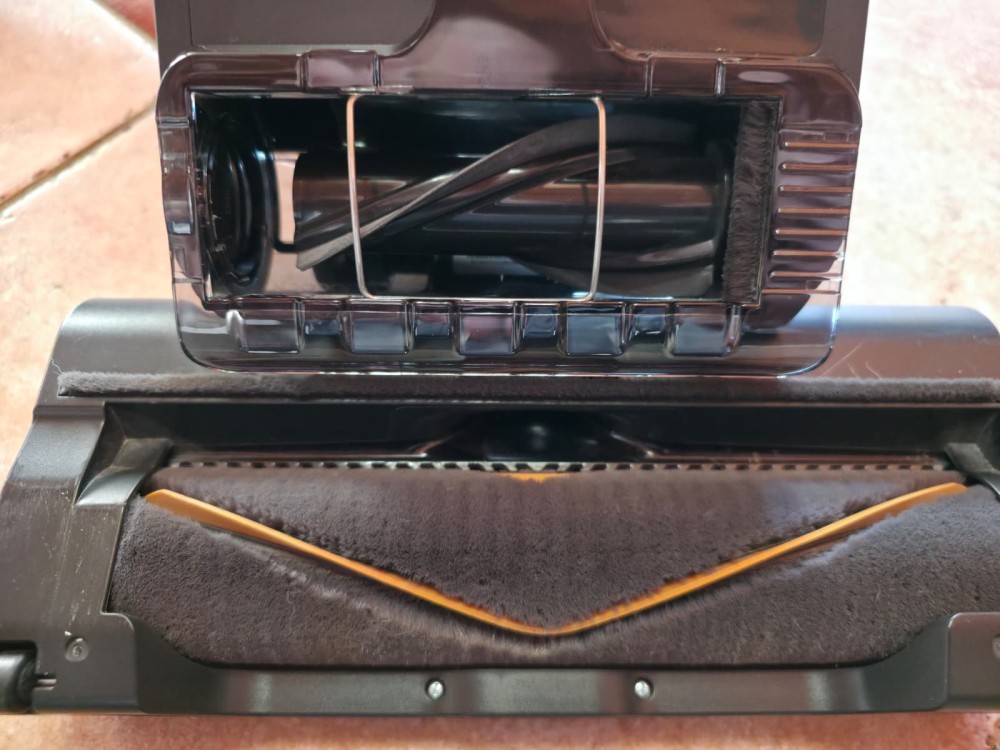
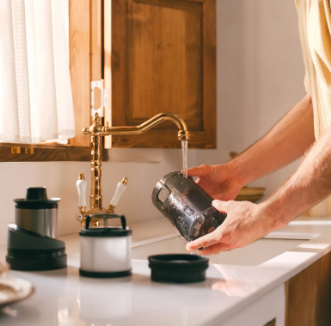
There’s another technology here that’s worth a closer look: Roborock calls it JawScrapers Hybrid. It’s a hybrid brush that combines a shark-tooth design with an integrated V-shaped fiber and rubber roller. The idea is that hair and pet fur are captured, guided, and separated during rotation, reducing tangles. This is one of the things that convinced me the most, because I never found hair or fur wrapped around the roller. And it’s exactly the kind of detail that changes the experience: a cordless vacuum may clean well, but if every couple of sessions you have to cut hair off the roller, your desire to use it quickly fades.
Pets at home: why it can be a particularly sensible choice
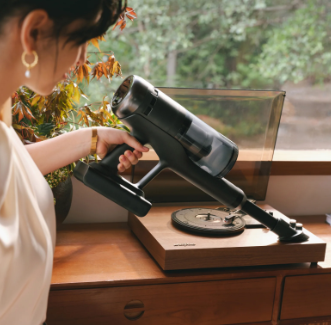
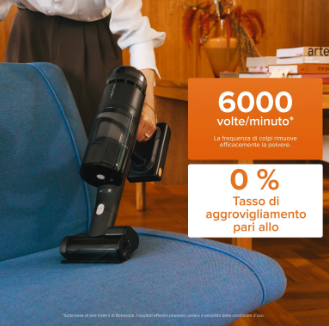
With pets, the typical situation is a mix of fur, fine dust, debris brought in from outside, and sometimes litter material. On hard floors, fur is a relatively “easy” task for a powerful cordless, and the H60 Hub Ultra tends to handle it well thanks to its pickup capability and the ease of making quick passes without fur becoming a problem for the brush. There’s also a mini motorized brush designed specifically for sofas, beds, and fabrics, useful for removing hair without tangling.
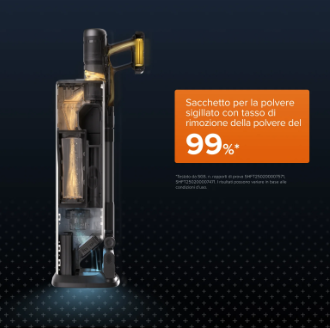
The most interesting point, however, is post-cleaning management: automatic emptying into a sealed bag greatly reduces contact with fur and dust, limiting the typical “dust cloud” effect of manual emptying. Here, the presence of fine filtration and a separation system further helps on the allergen side, because the goal isn’t just to collect dirt, but also to avoid putting it back into circulation.
One practical aspect should be considered: with pets, the dock’s bag fills up faster. That’s not a flaw, it’s the natural consequence of collecting more volume. Simply put, pet owners should expect more frequent bag changes, balanced by a much more hygienic and convenient system.
Battery and runtime: what to expect, without illusions
The removable battery is a real advantage because it makes replacement easier over time and, if spare batteries are available, can extend cleaning sessions. That said, the reality of high-power cordless vacuums is always the same: the more power you use, the faster consumption rises.
The “up to 90 minutes” figure should be interpreted as ECO mode with the 2-in-1 accessory. As soon as you move to MED or MAX, runtime drops to around 25–30 minutes in MED and 8–10 minutes in MAX. The declared runtime is up to 90 minutes (typically in ECO), but in my real-world use I observed about 25–30 minutes in MED and 8–10 minutes in MAX.
From a user-experience standpoint, I agree with a criticism I’ve seen repeated: there’s no true intelligent Auto mode that adjusts power based on dirt, so you have to manage power levels yourself, and, as a result, the battery as well.
For me, these numbers paint a realistic picture of how it should be used: ECO for maintenance and long sessions; MED for thorough cleaning with good autonomy; MAX as a mode for targeted bursts.
Bottom line
I really liked the combination of suction, green light, and especially the JawScrapers roller, which in my case did an excellent job: no hair or fur wrapped around it, less maintenance, and more continuity of use.
The limitations, in my view, are the typical ones of powerful cordless vacuums: MED/MAX runtime isn’t infinite and needs to be managed, and the absence of an Auto mode forces you to think about which power level to use.
If you find it on sale around €400, it enters a range where it becomes a very rational choice for anyone who wants a powerful but above all convenient cordless vacuum, especially in homes with pets.
The Roborock H60 Hub Ultra is a cordless vacuum designed to make you clean more and think less about it. This “zero hassle” philosophy extends to the rest of the product: the dock isn’t just a base, but a hub that charges and auto-empties, and also keeps accessories stored in an orderly, clean, and invisible way, without turning a corner of your home into a display of nozzles and brushes. It’s a very tech-driven approach: it doesn’t just sell you power, it sells you time, health and design.
As usual, I’ll leave the Linktr.ee for anyone who would like to take a look at the NonSoloRobot™️ communities and social channels, you’re all very welcome, and happy smart living to everyone!
