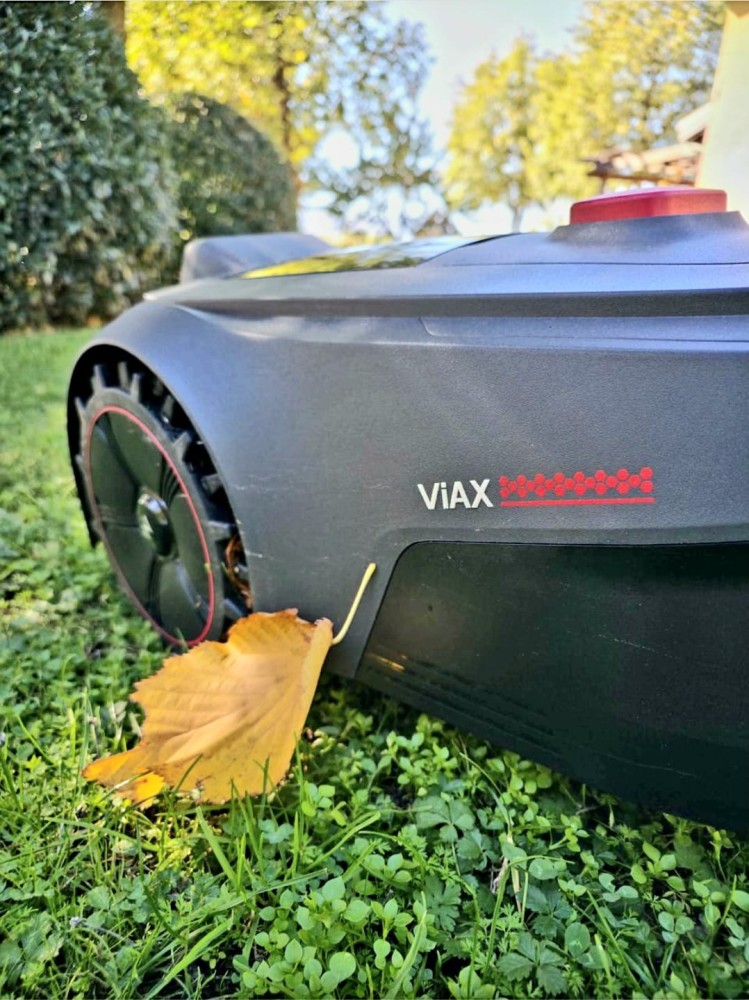
In the landscape of next-generation robotic lawn mowers, the ViAX 250 by MOVA is one of those products that are better understood through real-world experience than by simply reading a spec sheet. When people think about a robotic lawn mower, the image that often comes to mind is a device that is complicated to install, with boundary wires to lay down, repeaters to install, and configurations to complete before ever seeing a single strip of grass cut. The MOVA ViAX 250 completely changes this paradigm because it was designed, first and foremost, to simplify lawn care.
It is not meant to cover large areas or impress with extreme numbers, but to solve a very concrete problem: making lawn mowing truly automatic and plug & play in small gardens, without turning installation and daily management into a technical project.
The difference here lies in the technological approach. MOVA built the ViAX 250 entirely around an advanced visual perception system that allows the robot to understand the lawn even before it starts moving.
The core of the ViAX 250 experience is precisely how easy it is to get it up and running. This robot does not require any boundary wires to be laid, no antennas to be connected, and no base to be calibrated. You simply turn it on, connect it to the MOVAhome app, and within minutes the robot begins to “understand” the space it is in: it observes it, memorizes it, and then knows exactly where to move.
A robot that sees, interprets, and decides
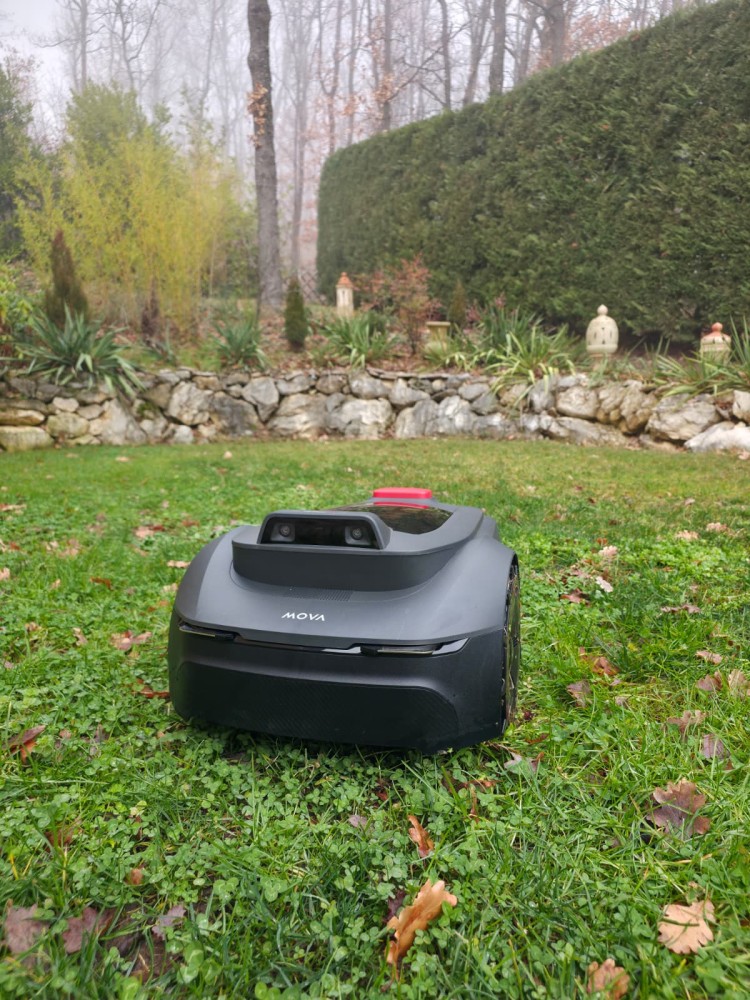
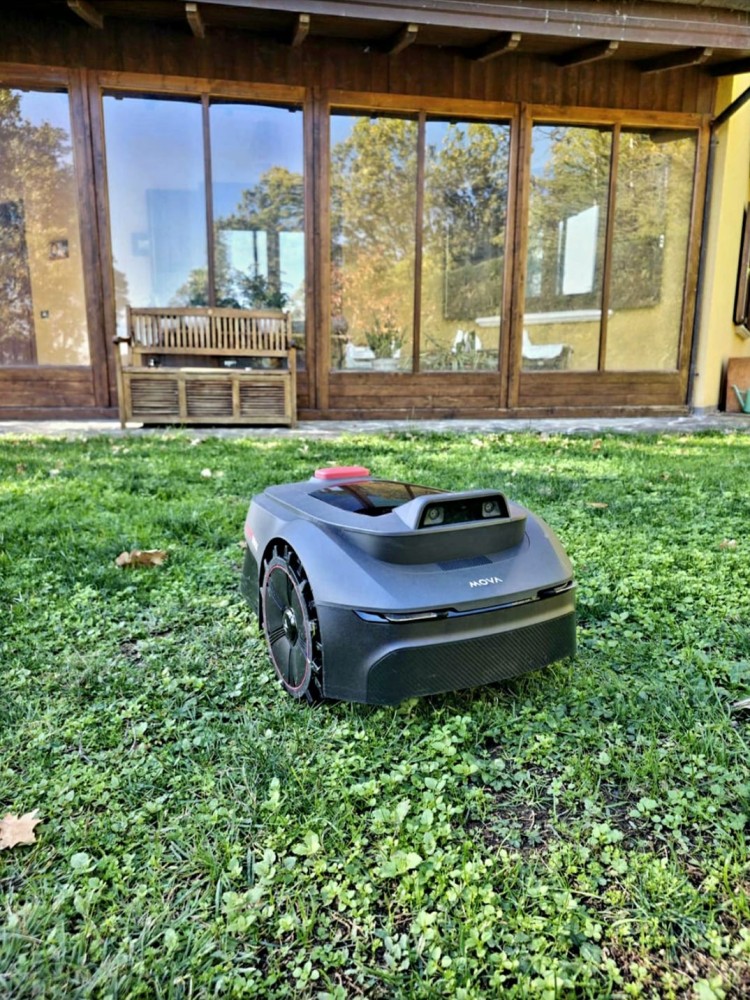
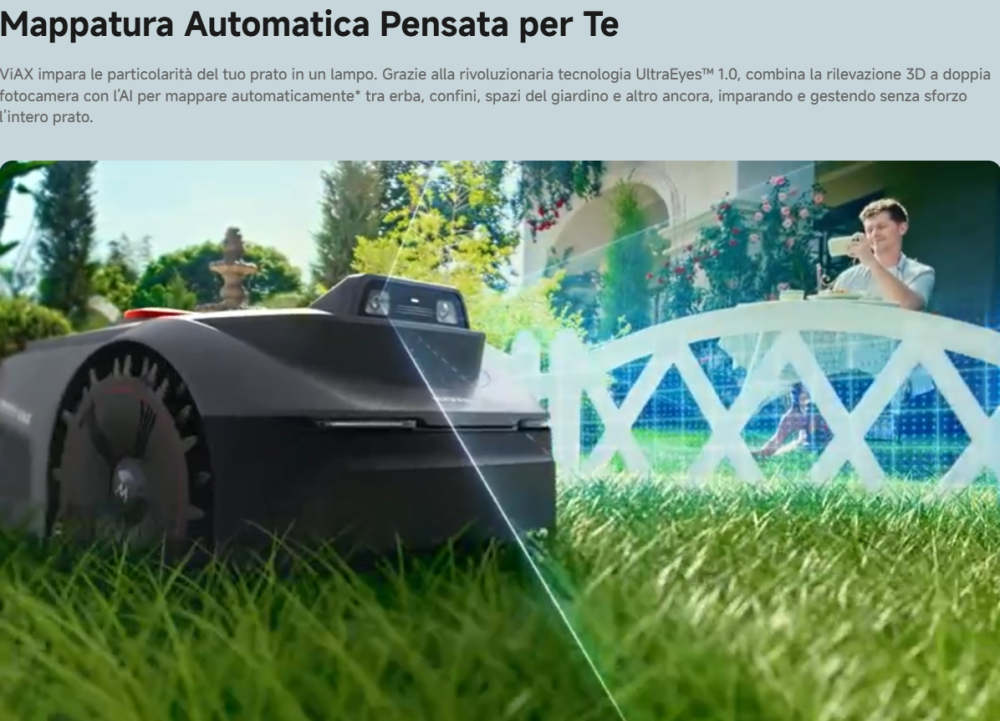
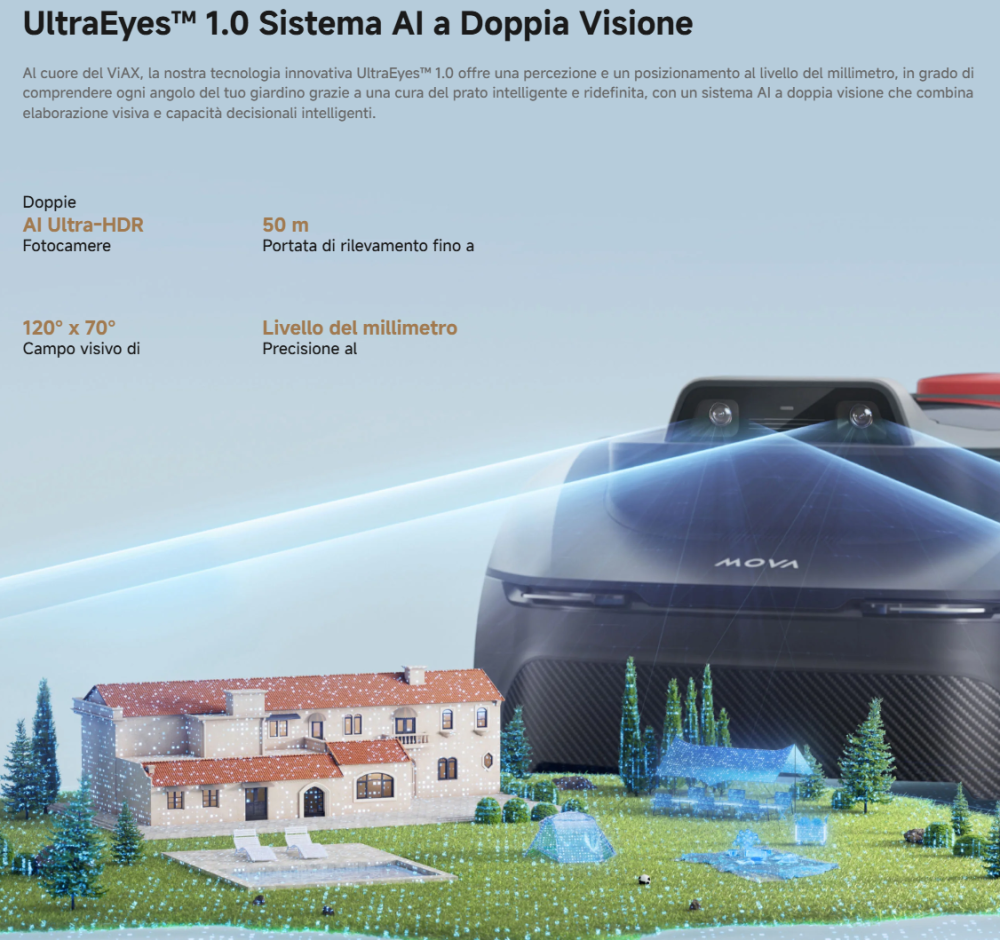
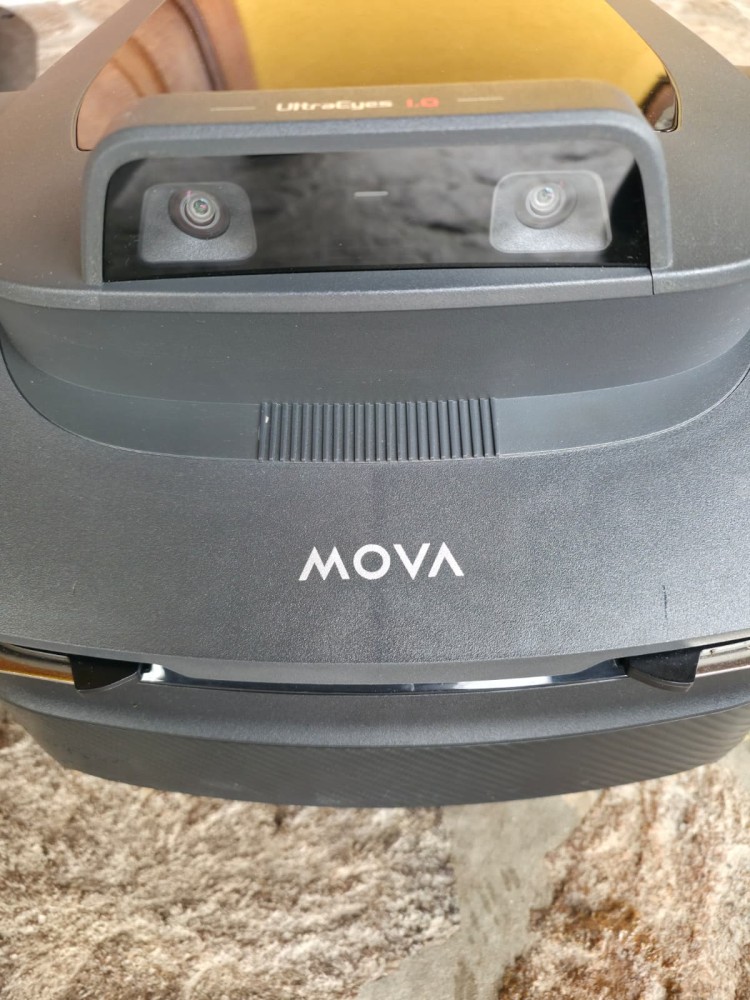
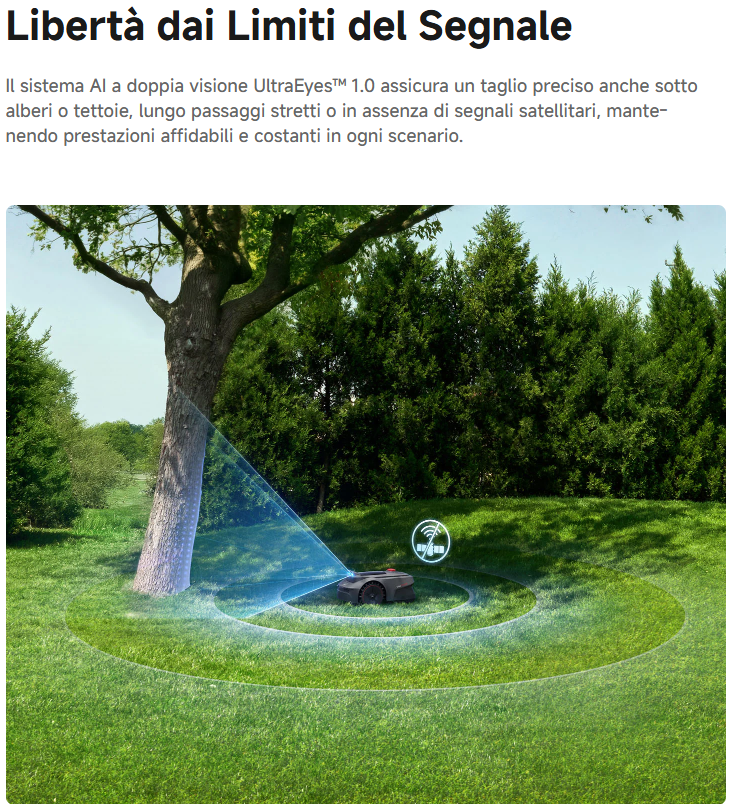
At the heart of the ViAX 250 is the UltraEyes™ 1.0 system, a dual-camera artificial vision platform that operates continuously while the robot moves. It is not just a support camera: it is the main reference for orientation, mapping, and safety.
Thanks to Ultra-HDR dual vision with a 120° × 70° field of view, a detection range of up to 50 meters, and AI processing, the robot can reliably distinguish grass from edges, mowable surfaces from areas to avoid, and permanent obstacles from temporary ones. This is why the ViAX 250 can operate without a boundary wire, without LiDAR systems, and without RTK stations, while still maintaining high precision, even in conditions where other systems struggle: under trees, near walls, alongside hedges, or in areas with unstable satellite signals.
It is a more “human” approach: the robot observes, understands the context, and then acts, rather than simply following predefined rigid boundaries.
Navigation as it should be: automatic and flexible
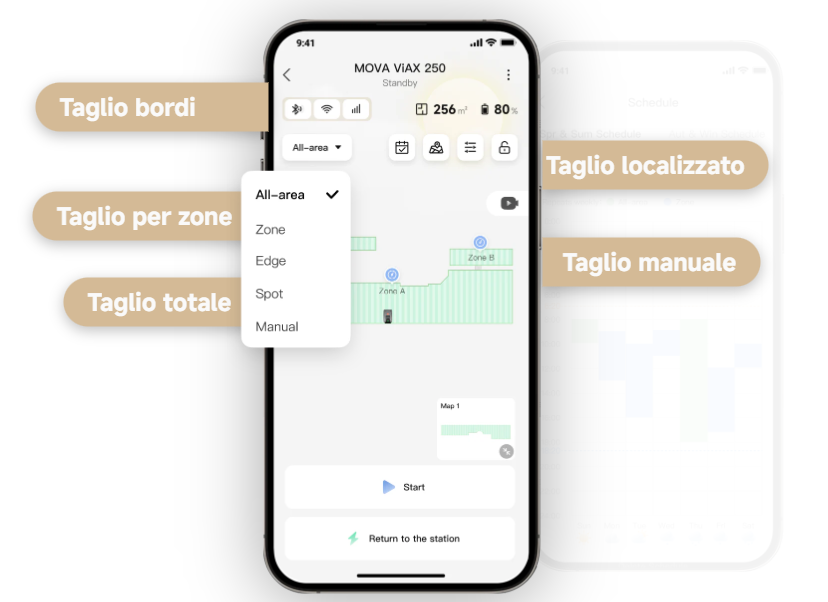
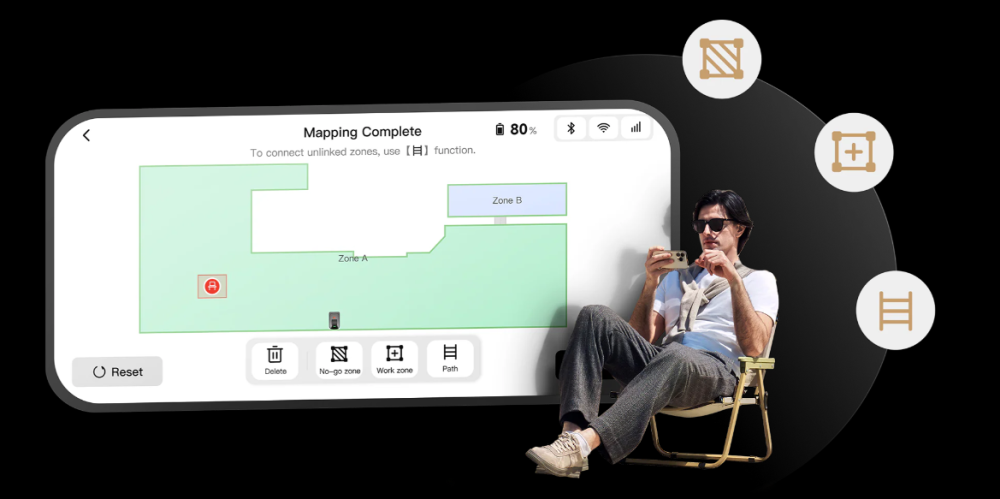
This interpretative capability is most evident in the garden mapping process. The ViAX 250 does not require the user to design everything in advance: it explores the lawn, learns its shape, and builds a coherent map, which can then be refined through the MOVAhome app.
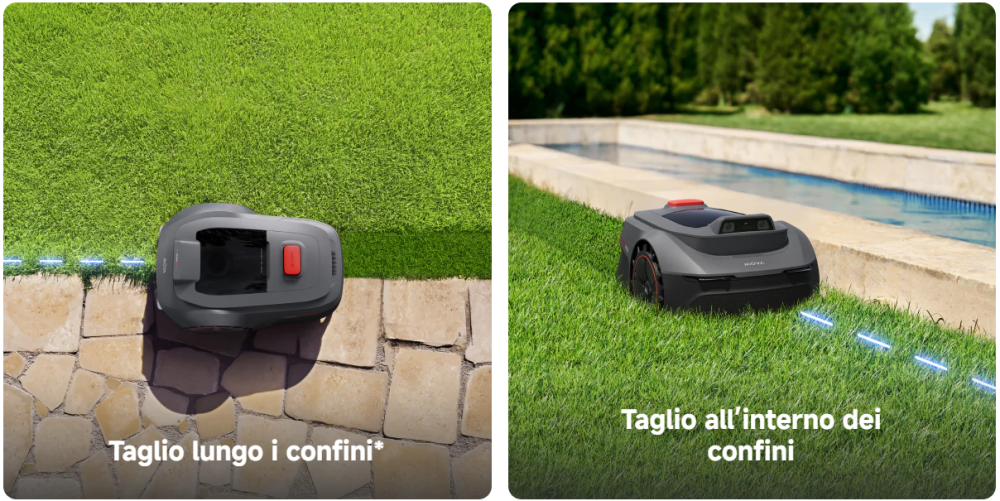
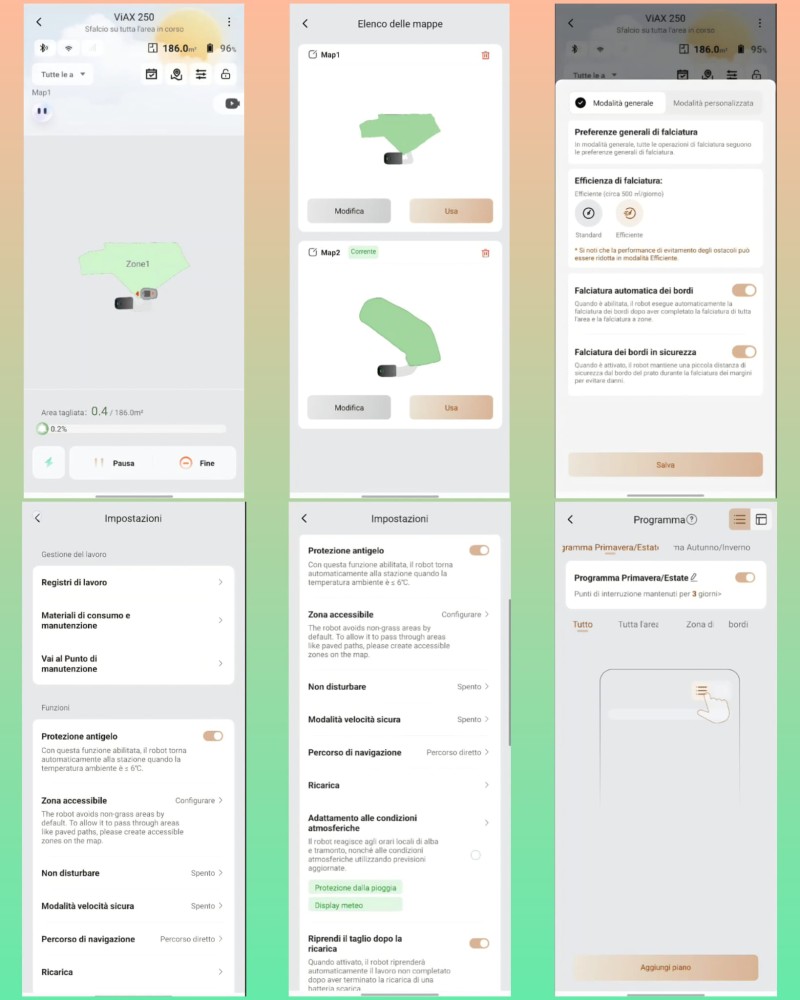
No technical knowledge or special tools are required: everything is managed from the app, where virtual boundaries can be created and working schedules can be set. Multi-zone management is one of the most successful aspects. Different zones can have different schedules, frequencies, and operating modes, allowing the mowing process to be adapted to the real needs of the garden. Specific areas such as flower beds, pools, or decorative spaces can be excluded, and intelligent connections can be created between separate zones, without any physical intervention on the lawn.
The ViAX 250’s mapping is one of those aspects that, in daily use, immediately gives the impression of a well-designed system that is also aware of its own limits. Navigation works reliably and is overall precise, but it is clear that MOVA has chosen to keep safety margins fairly wide. In practice, the robot tends to “stay a bit wide” along boundaries, especially near edges, to avoid trespassing or risky behavior.
The robot’s behavior proved to be consistent and generally very accurate, but one important clarification is needed. The ViAX 250 relies exclusively on vision, albeit wide and well managed, and does not have, unlike more complex systems, a true physical perception of its absolute position in space. This means the robot adjusts its movement based on what it “sees,” not on a combination of positioning sensors.
In a couple of situations, I noticed that the edge shown in the app did not perfectly match the real-world edge down to the millimeter. These were minimal differences, but noticeable when carefully observing the work along the boundaries. That said, it is equally fair to point out that the app always allows intervention: you can manually adjust the edge or, if necessary, start a new mapping process in just a few minutes.
It should also be noted that, compared to the first days of use, software updates have significantly improved system behavior. Overall precision has increased, and edge handling has become more reliable. This is not a “perfect” technology, and it would be wrong to present it as such. If it were, robots costing several thousands of euros that combine LiDAR, RTK, radio sensors, and other advanced technologies would not exist.
The ViAX 250 follows a different path: offering a solution that is as simple, accessible, and understandable as possible, while still maintaining a very good level of precision for its reference segment. It is a declared compromise, and in context, it is one that works.
Precise cutting, even in difficult areas
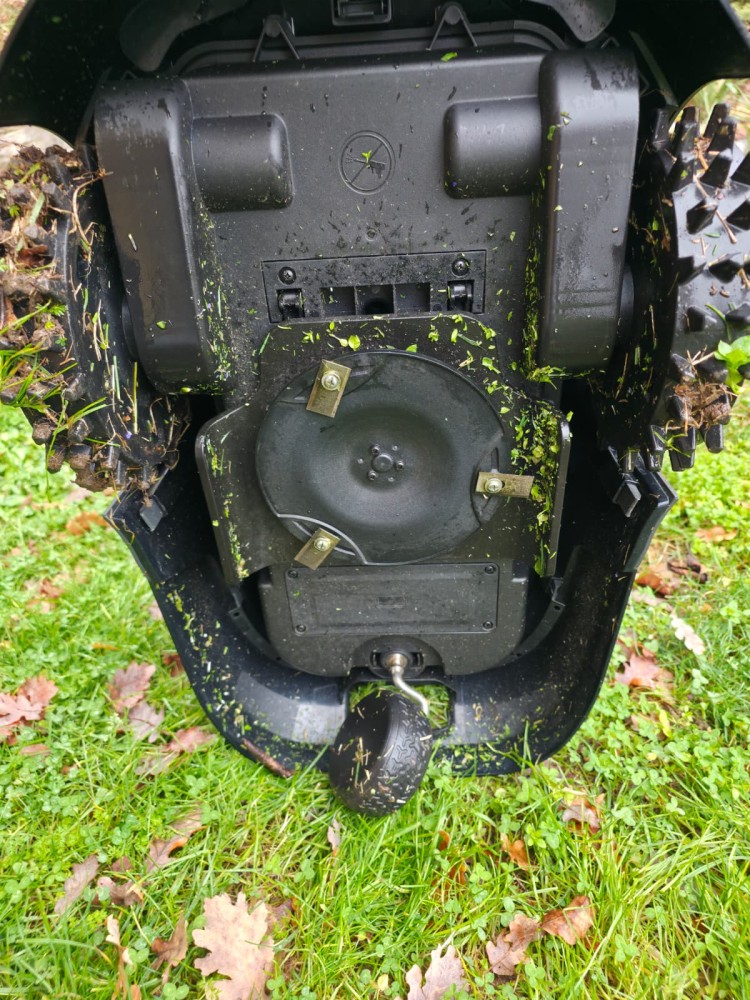
From a cutting perspective, the ViAX 250 shows a level of design care that is often missing in entry-level models. The floating cutting system allows the blades to follow terrain irregularities, maintaining a consistent height even on surfaces that are not perfectly level. This results in a more uniform lawn and fewer visible marks after the robot passes.
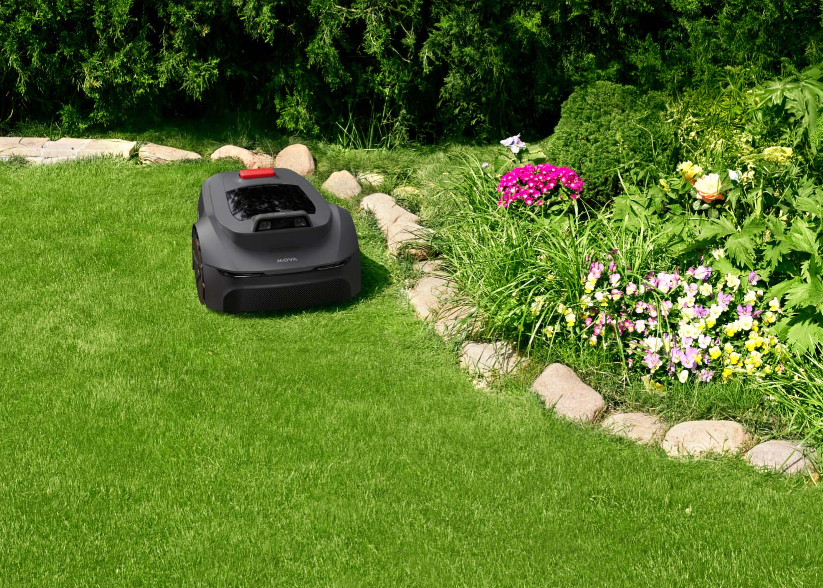
Edge performance is good. The robot gets very close to boundaries where the grass meets the edge, significantly reducing the need for manual trimming. Path planning, which follows an orderly and repeatable U-shaped pattern, also helps give the lawn a cleaner and more well-maintained appearance over time.
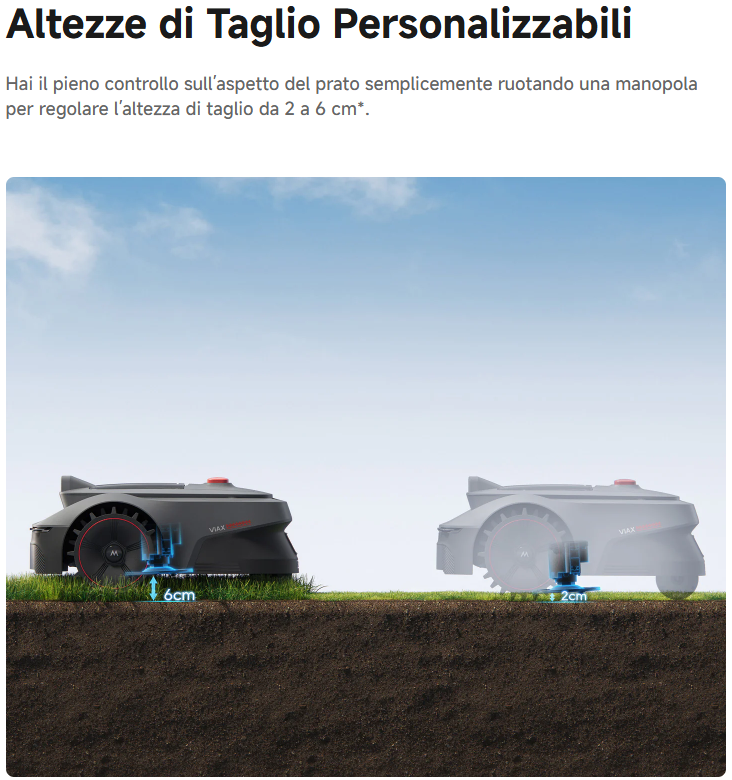
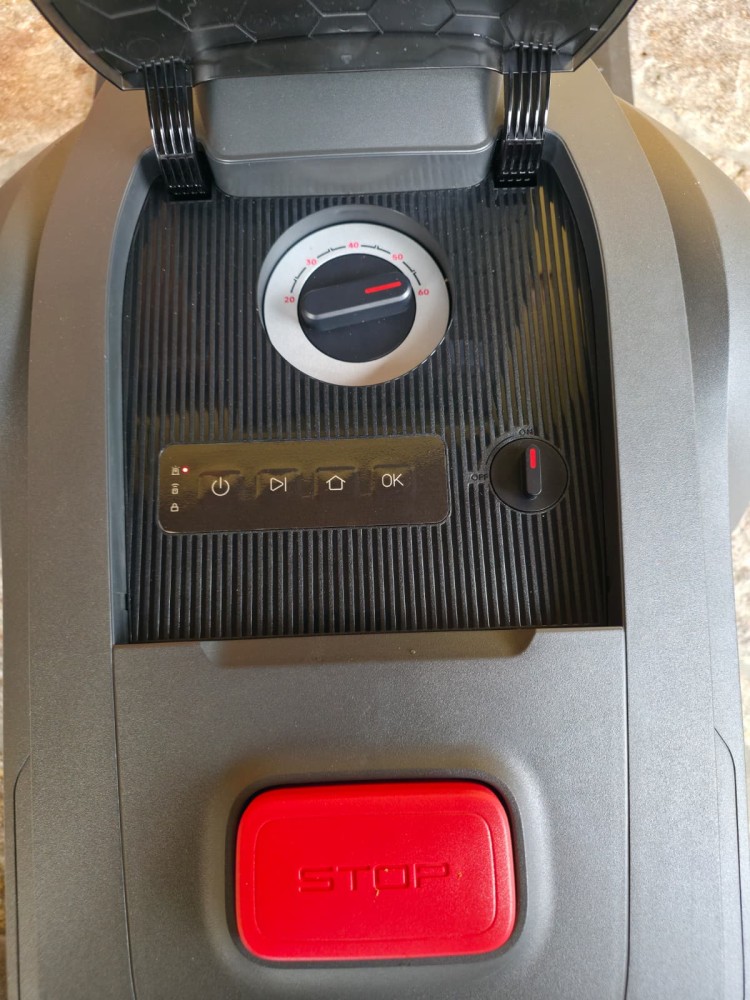
Cutting height adjustment is done via a dial, from 2 to 6 centimeters, allowing the result to be adapted to seasons or personal aesthetic preferences.

Real mobility, not just claimed
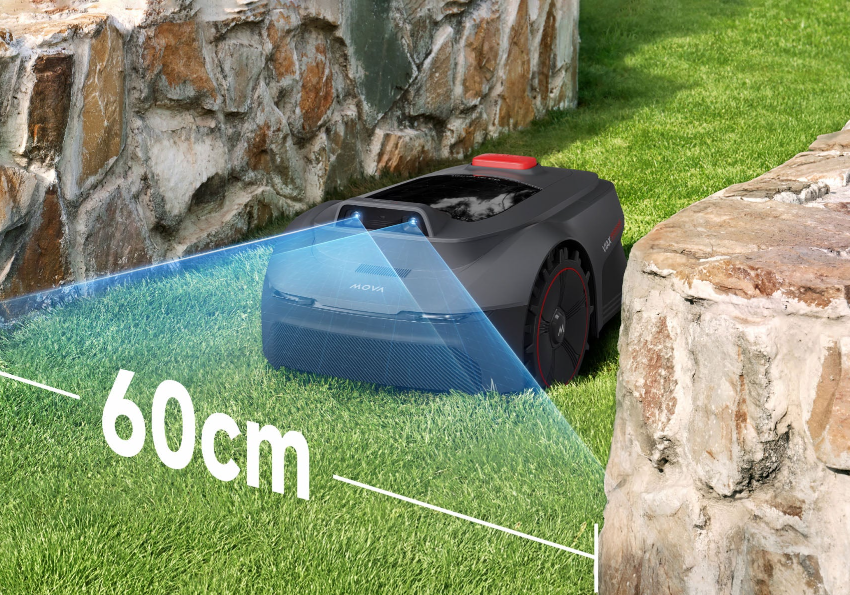
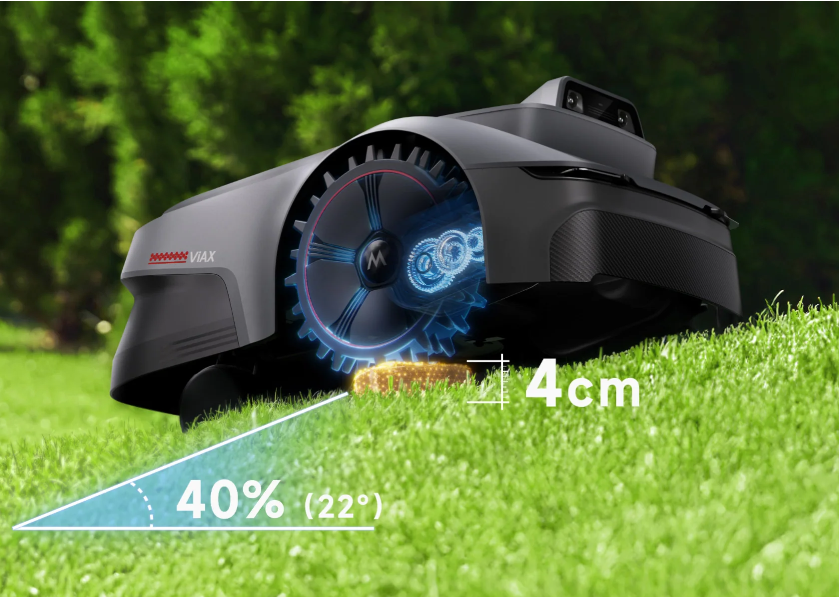
In small gardens, mobility is often more important than pure speed. The ViAX 250 moves confidently in tight spaces, navigating passages as narrow as about 60 cm, and easily handles significant slopes of up to 40% as well as small obstacles up to 4 cm.
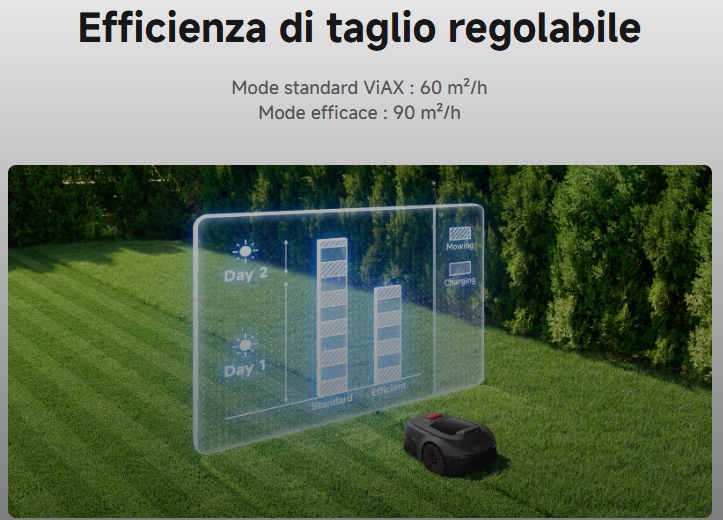
Efficiency still plays an important role: the ViAX offers two cutting speeds: Standard, covering up to 60 m² per hour, and Efficient, reaching up to 90 m² per hour.
This behavior is not the result of a single element, but of the balance between vision, traction, and intelligent motion management. This is why the robot rarely gets stuck and manages to cover the entire area even in gardens that are not perfectly regular.
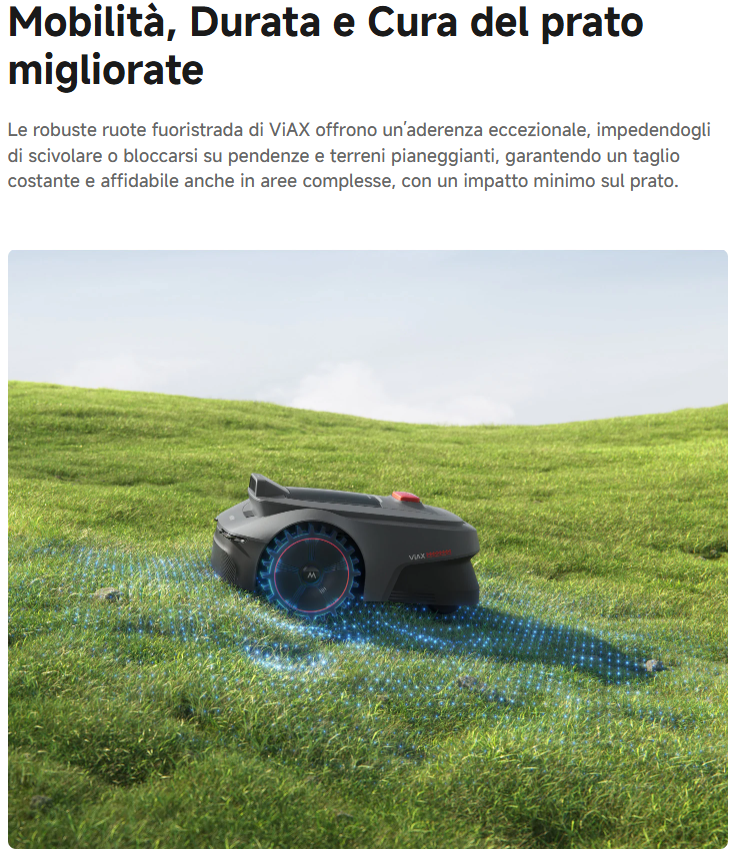
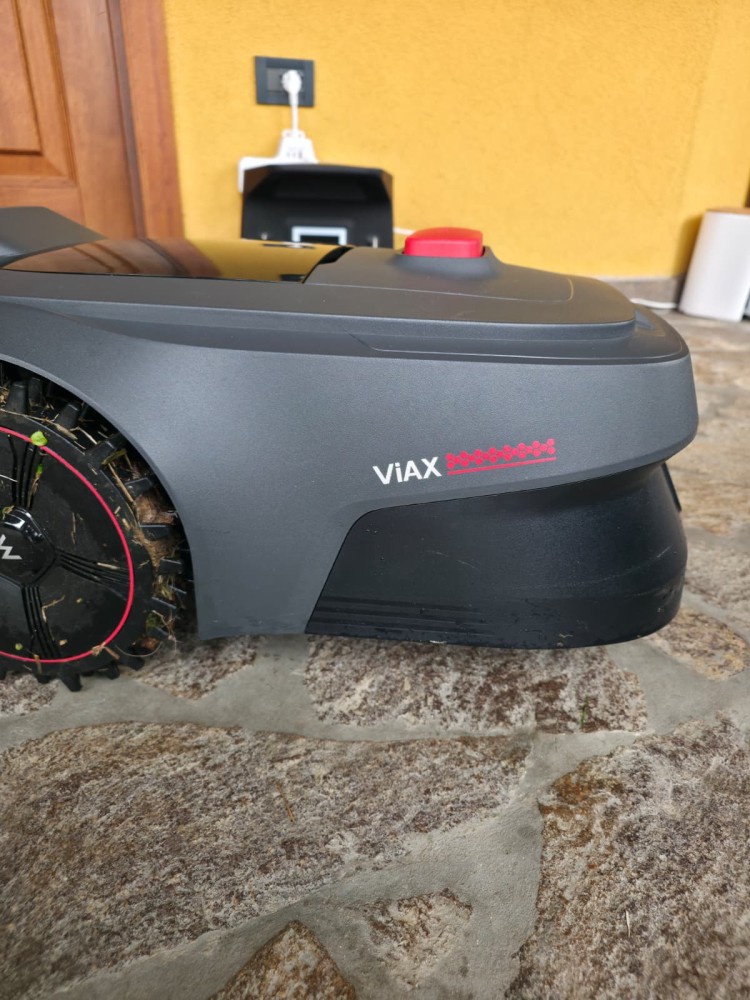
A design detail that becomes especially evident in daily use is the choice of off-road wheels combined with front-wheel drive, a less common but particularly sensible solution. Having traction at the front improves the robot’s ability to “pull itself out” of critical situations such as narrow passages, tight turns, or areas where the lawn meets rigid edges or changes in slope.
This approach has two concrete advantages. On one hand, the robot can maneuver more precisely in confined spaces, reducing the micro-corrections and repeated maneuvers often seen in rear-wheel-drive models. On the other, force distribution limits wheel slippage on the grass, resulting in a noticeably gentler impact on the lawn, especially during steering or restarting.
The sculpted wheels, designed for uneven terrain, complete the picture: they ensure grip even on significant slopes and on surfaces that are not perfectly dry, without turning the robot into a “plow.”
Safety designed for people who actually live in the garden
The ViAX 250’s artificial vision is not only used for navigation, but also for protection. An interesting, and rather rare, aspect in this product category is how MOVA has extended the concept of safety beyond simple mowing operation. The TrueGuard™ system leverages the UltraEyes vision platform not only to avoid more than 300 obstacles, but also to turn the robot into a genuine intelligent guardian.
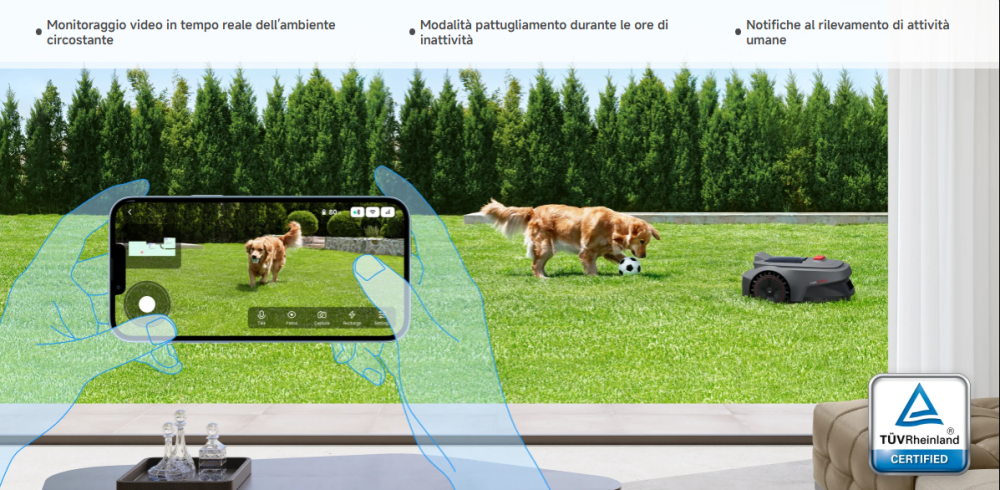
When the ViAX 250 is not mowing, it can enter patrol mode, monitoring the surrounding area and providing a live view directly through the app. This is not a camera for its own sake, but a system designed to report relevant events, such as the presence of people or unusual movement within mapped areas. It is particularly valuable in gardens visible from outside or in second homes, where passive monitoring of outdoor space can be useful.
TrueGuard also works on the anti-theft front. In case of unauthorized lifting or movement, the robot emits an alarm and immediately sends a notification to the user. Optional integration with the MOVA Link module also enables GPS tracking and alerts when virtual boundaries are crossed, making any theft attempt far less “silent” than the thief might expect.
Privacy is another important aspect. The entire system operates within the MOVAhome ecosystem, with data management certified by TÜV Rheinland. This means the surveillance function remains a conscious, non-invasive control tool designed to protect the user.
Overall, TrueGuard is an example of how the ViAX 250’s artificial vision is used in a cross-functional way, not only to cut grass better, but to make the garden safer and easier to manage, even when the robot is not working.
The Animal Friendly mode is particularly interesting for those with pets or who live in areas with wildlife. The ability to set schedules or zones where the robot automatically stops, especially in the evening or at night, is one of those thoughtful touches that make a real difference in everyday use.
A product that fades into the background (in the right way)
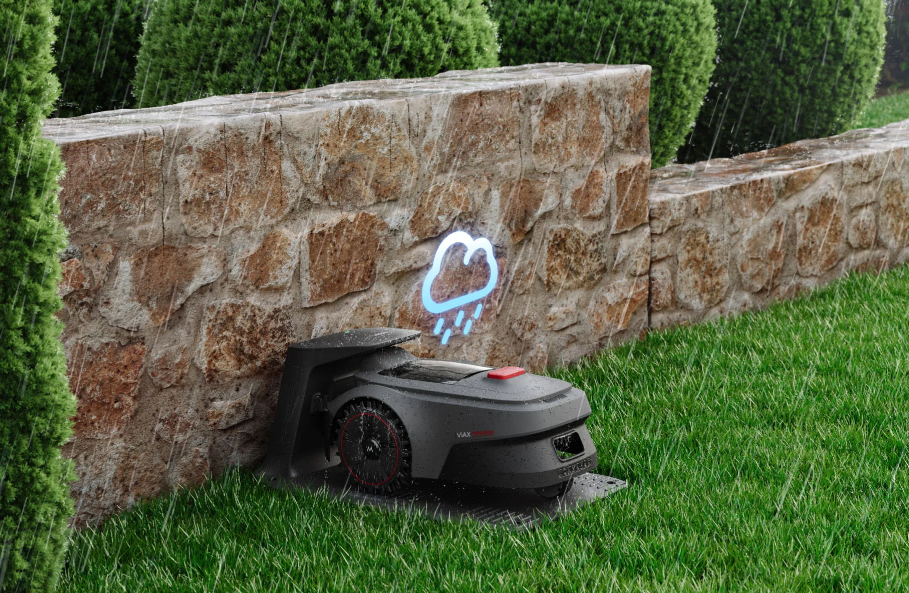
From a practical standpoint, the ViAX 250 is designed to require little maintenance and to integrate seamlessly into the routine of your outdoor space. It is water-resistant (IPX6), making it perfectly suited for outdoor use and easy to clean.
One of the most successful aspects of the ViAX 250 by MOVA is its ability to blend into garden life almost imperceptibly. Not because it does less than others, but because it knows when to work and when it is better to stop.
This balance comes from the system’s ability to read the environmental context. The ViAX 250 does not operate according to a rigid schedule: it can monitor local weather conditions and adapt its mowing behavior based on seasonal periods. Through the app, different programs can be set for wetter seasons or drier periods, when grass grows more slowly, helping preserve lawn health.
The same adaptive logic applies to light and timing. The ViAX 250 can recognize when the day is coming to an end and, especially when animal protection mode is active, stops working at sunset and returns to recharge. This behavior requires no manual intervention and respects garden life.
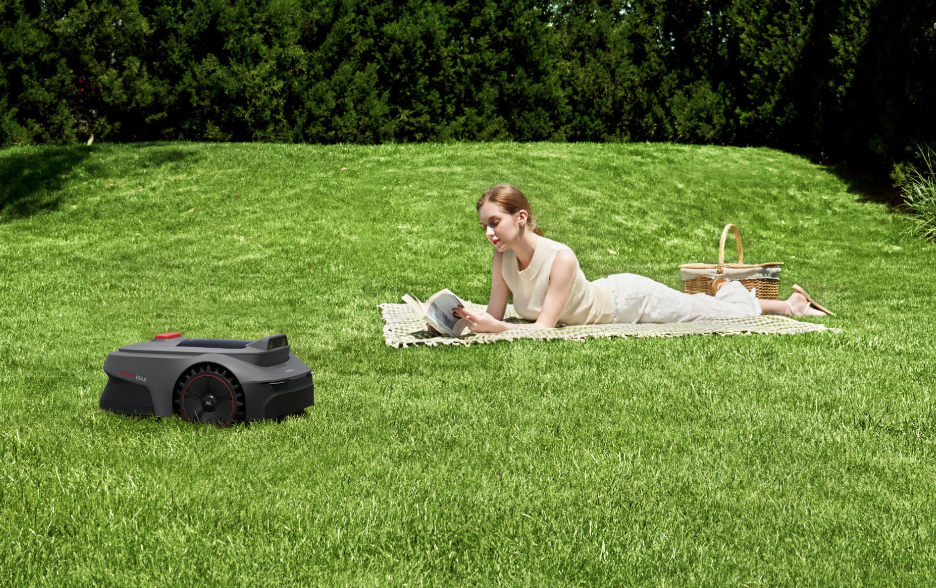
All of this would be far less effective if the robot were noisy or intrusive. During operation, it maintains a noise level below 57 decibels, which is technically very low for a robotic lawn mower. In practice, this means it can work without disturbance, even in the early morning or during weekends. It is background noise that blends into the environment.
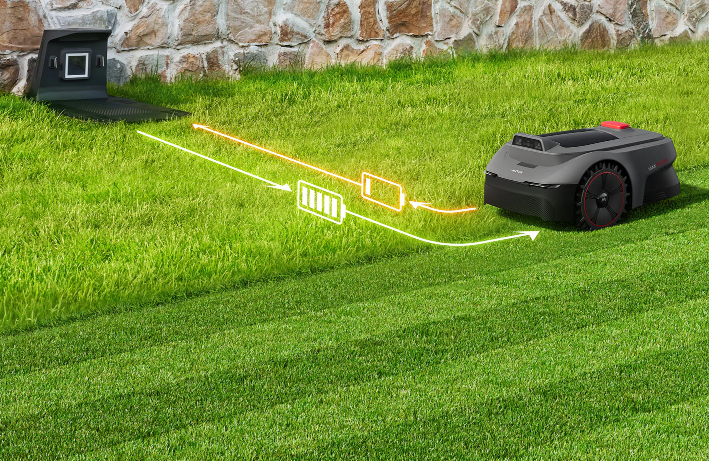
Energy management follows the same philosophy of discretion. When the battery approaches a low level, the robot automatically returns to the base, recharges, and resumes mowing exactly where it left off. Charging is fast, about 45 minutes, allowing the ViAX 250 to complete lawn maintenance without endless sessions or prolonged downtime.
Package contents and installation
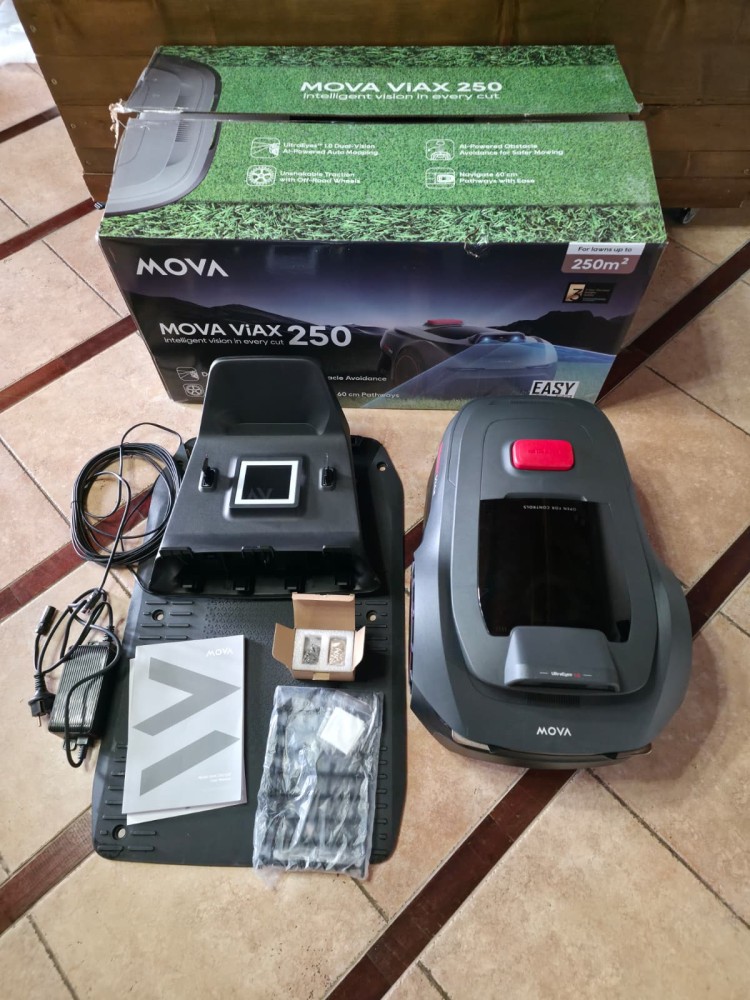
Inside the box, the MOVA ViAX 250 includes everything needed to start using it immediately: the robotic lawn mower itself, the charging station with its power supply, ground stakes and an Allen key for fixing and initial adjustments, as well as a cloth for cleaning the camera glass. It is an essential yet complete kit, consistent with the idea of a product designed to be quick and easy to install and maintain.
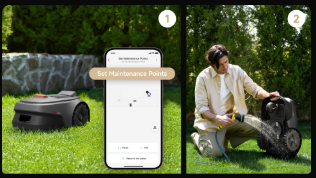
It is also worth highlighting a practical aspect that only emerges in real-world use. Although the stakes allow the base to be fixed directly on the lawn, the charging station is not necessarily tied to the grass. It can also be placed on a walkway, a paved surface, or in a sheltered area. In my case, the base was even installed inside a closed attic space: by simply leaving the door open, the robot can recognize the opening thanks to the customizable paths set in the app, autonomously exit the covered base, cross the threshold, and reach the lawn without issues. This is a detail that clearly demonstrates the flexibility of the navigation system and the ViAX 250’s ability to adapt to unconventional installations, offering a level of freedom that is far from obvious.
Availability and pricing
The ViAX series was officially introduced for the Italian market with availability starting from January 27, 2026. The ViAX 250 version described here is priced at €579, a competitive price considering what it offers in terms of automation and ease of use. MOVA has also planned other models in the series, such as the ViAX 300 at €599 and the ViAX 500 at €749, the latter expected to be available around March 2026. Like all MOVA products, the ViAX series comes with a 3-year warranty.
Conclusions
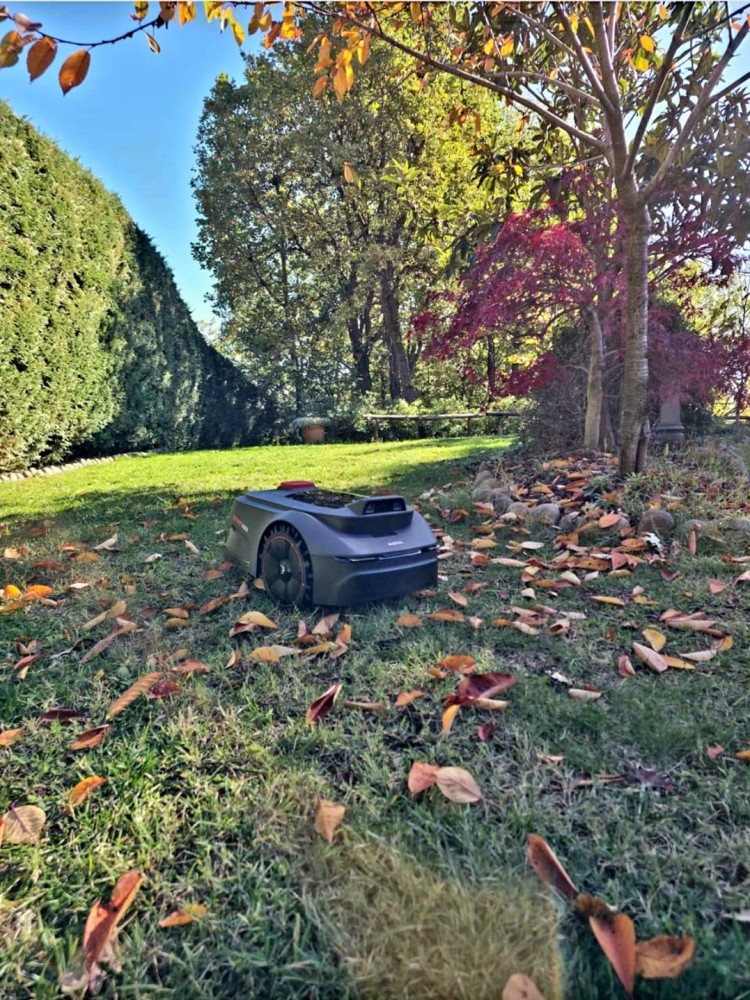
The MOVA ViAX 250 is a robotic lawn mower that convinces. It is designed for those with a small garden who want a truly simple, affordable, and automatic system, without invasive installations and without the need to manage the robot on a daily basis. Once set up, it works autonomously and adapts to its environment without demanding constant attention.
It is a product where technology is not showcased, but used intelligently. And when a robot manages to work well without drawing attention to itself, it usually means it has been designed the right way.
As usual, I’ll leave the Linktr.ee for anyone who would like to take a look at the NonSoloRobot™️ communities and social channels, you’re all very welcome, and happy smart living to everyone!
