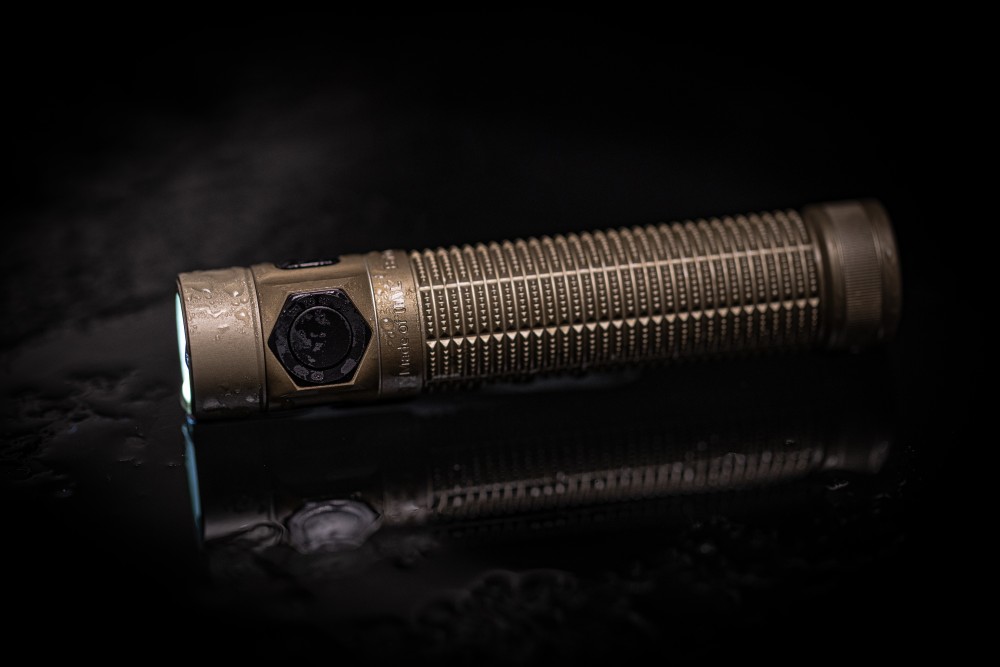
I received the Olight Baton Ultra in Olive Green as part of the Heyup Tryout program and tested it in everyday use over several evenings. My focus was not on a laboratory test with exact measurements, but on a realistic practical impression: How does the flashlight feel? How good is the build quality? How useful is the operation? And most importantly: is it truly practical as a compact EDC flashlight?
Before I start with my impressions, here are the specifications from the Olight shop:
Technical specifications
Dimensions: (L) 113 x (D) 23 mm
Max. throw: 300 m
Waterproof: IPX8
Weight: 115 g
Drop resistant up to: 2 m
LED: Max. 18 W
Brightness levels
Turbo: 1800–600 lm / 1.5 + 198 minutes
High: 600–120 lm / 200 + 20 minutes
Medium: 120 lm / 18 h 30 min
Low: 15 lm / 155 hours
Moonlight: <1 lm / 100 days
General specifications
Battery capacity: 3500 mAh
Battery voltage: 3.6 V
Battery energy: 12.6 Wh
Input: 4.2 V 1.5 A (MCC3) / 5 V 1.5 A (USB-C)
Operating temperature: 0–45°C
Charging type: MCC3 / USB-C
Charging time: 4.5 hours (MCC3) / 3.5 hours (USB-C)
Max. light intensity: 22500 cd
Package contents
Baton Ultra x1
MCC3 magnetic charging cable x1
L-bracket x1
User manual x1
—
Packaging and first impression
The flashlight arrived in a cardboard box as outer packaging. Inside was the actual product box, secured with some paper. The packaging of the flashlight itself makes a very good impression. It feels solid, premium and immediately gives the impression of a high-quality product. The black finish and the slightly embossed image of the Baton Ultra already look very nice.
Unboxing video:
Baton Ultra Unboxing
The package contents are well chosen. Included are:
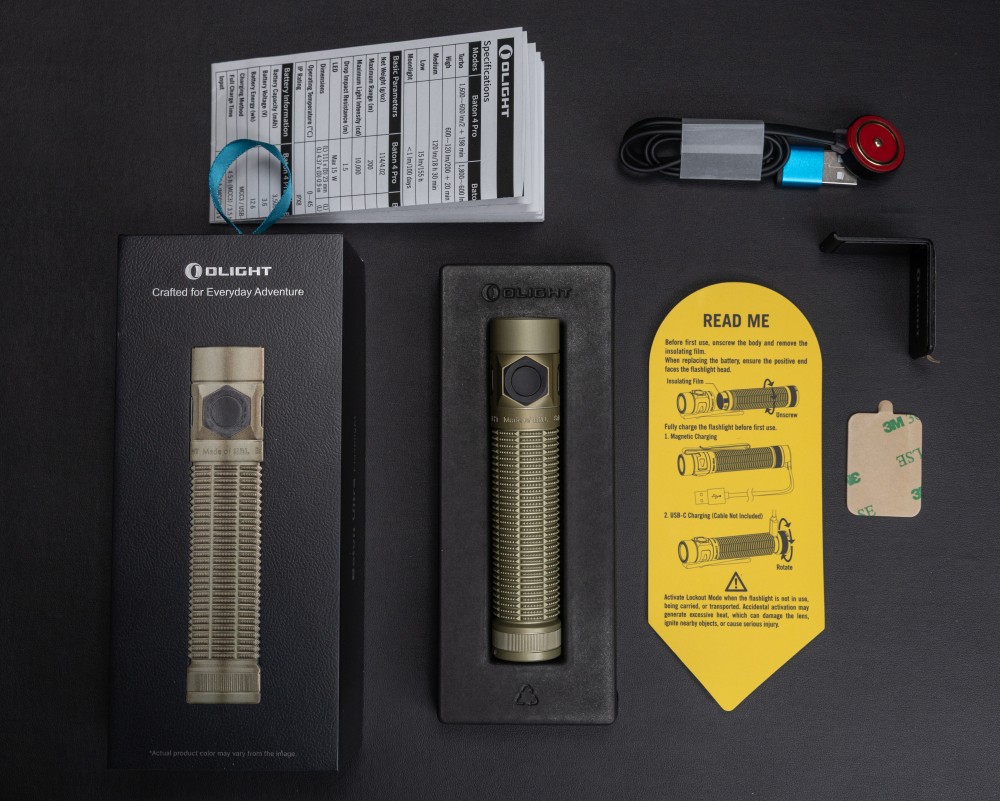
The flashlight is already pre-assembled, so it can be unpacked and used directly. However, it should be charged before first use. To do this, the flashlight needs to be opened once and a small plastic piece must be removed from the battery.
Overall, everything feels well thought out and presented in a premium way.
—
Design, build quality and material
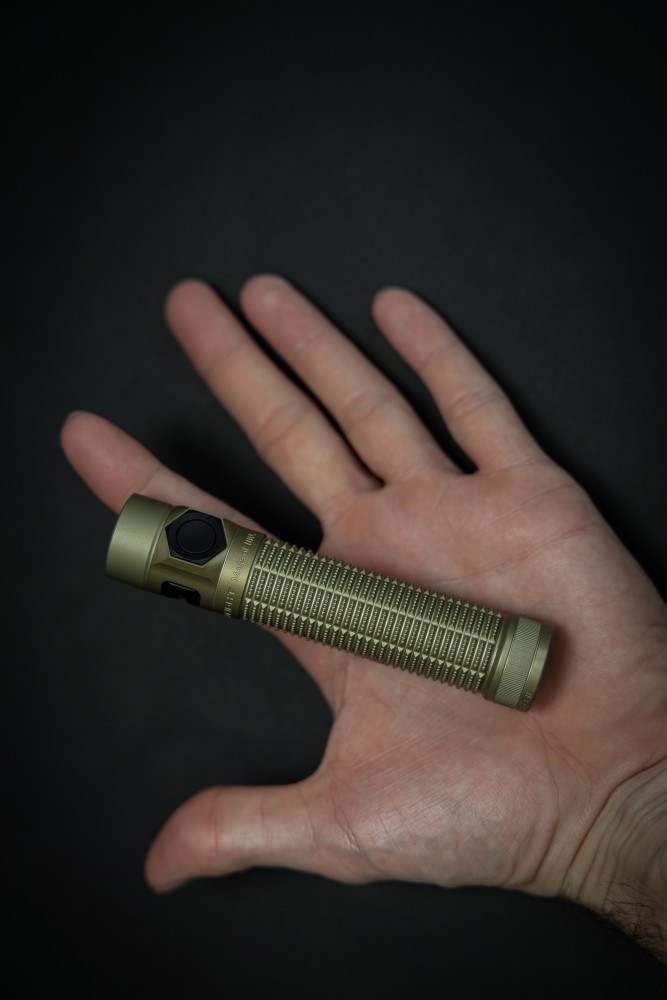
The Baton Ultra feels very good in the hand. It is compact, relatively light and sits securely in the hand. To me, it clearly has the character of a small EDC flashlight: not too big, not too heavy, but still serious enough not to feel like a toy.
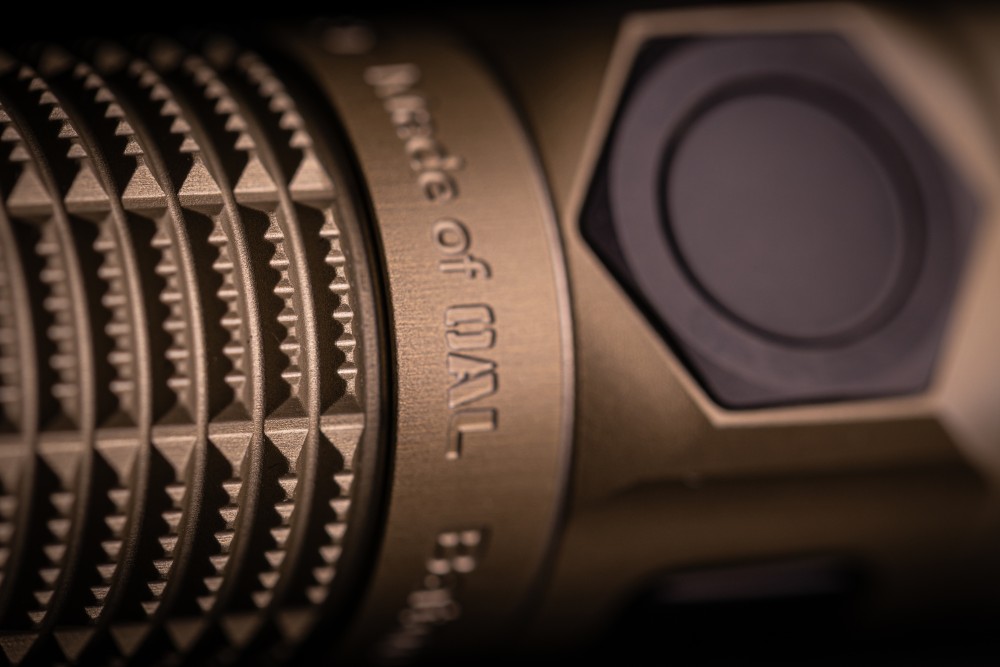
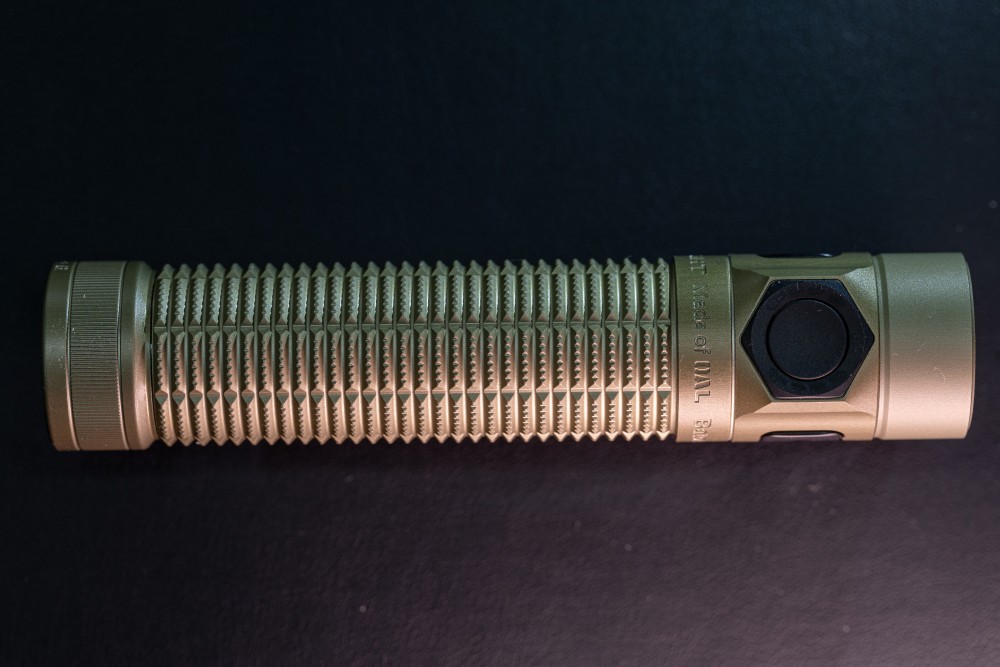
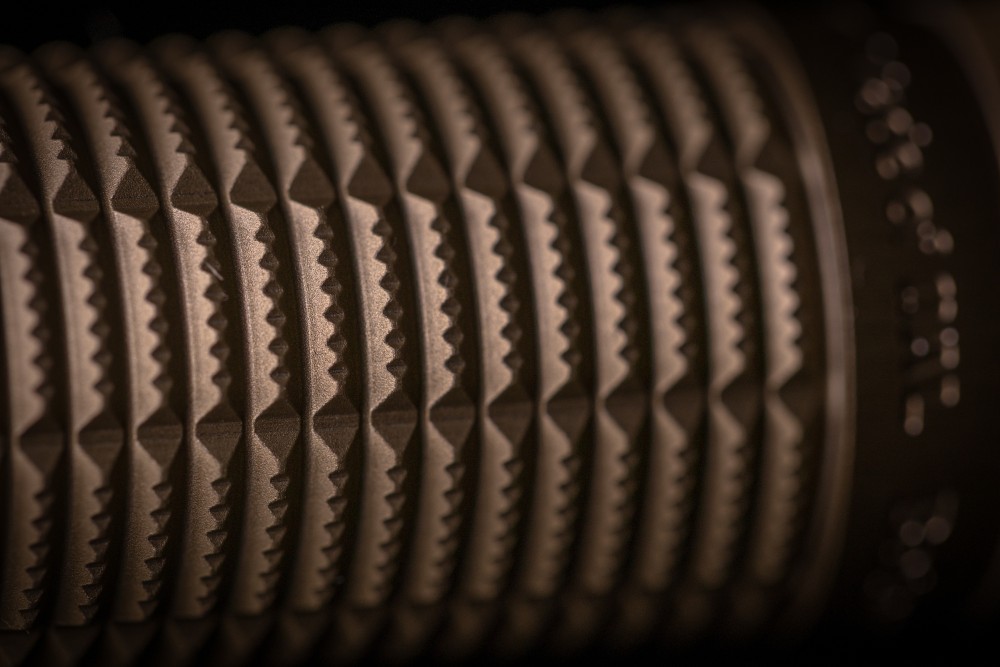
The OAL material is especially interesting. It feels metallic, but not cold, and the smooth areas have a pleasantly soft, almost velvety feel. At the same time, the textured areas provide good grip, so the flashlight is easy and secure to hold. Visually, the material may look somewhat delicate. In practice, however, I can confirm that OAL is very scratch-resistant, as I also own other Olight flashlights made from OAL. I have a small OAL flashlight on my keychain, and so far it has no scratches.
That is what makes this material special to me:
premium and elegant in the hand, but still robust enough for everyday use.
Short note about OAL
Information from Olight.com:
1.77x harder than 6061 aluminum
1.46x stronger in yield strength than TA2 titanium
1.7x stronger in tensile strength than TA2 titanium
Long-lasting fresh appearance:
Even with scratches and signs of wear from everyday use, it maintains a like-new appearance.
Natural color tone:
Anodized without added pigments, it shows an olive-green color inspired by nature — a mix of retro and modern urban style.
Natural feel:
Your fingertips can feel the unique texture of the material, which Olight describes as reminiscent of sun-warmed leaves after heavy rain.
The overall build quality is otherwise very good. Nothing wobbles, the gaps are even, the threads run smoothly and all parts fit the way I would expect from an Olight flashlight in this price range.
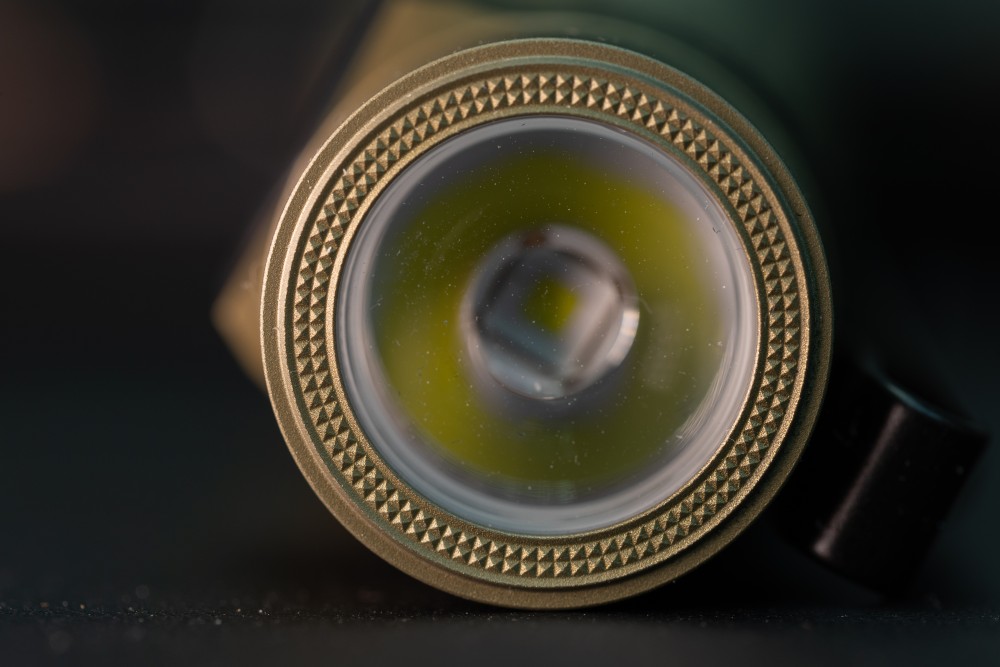
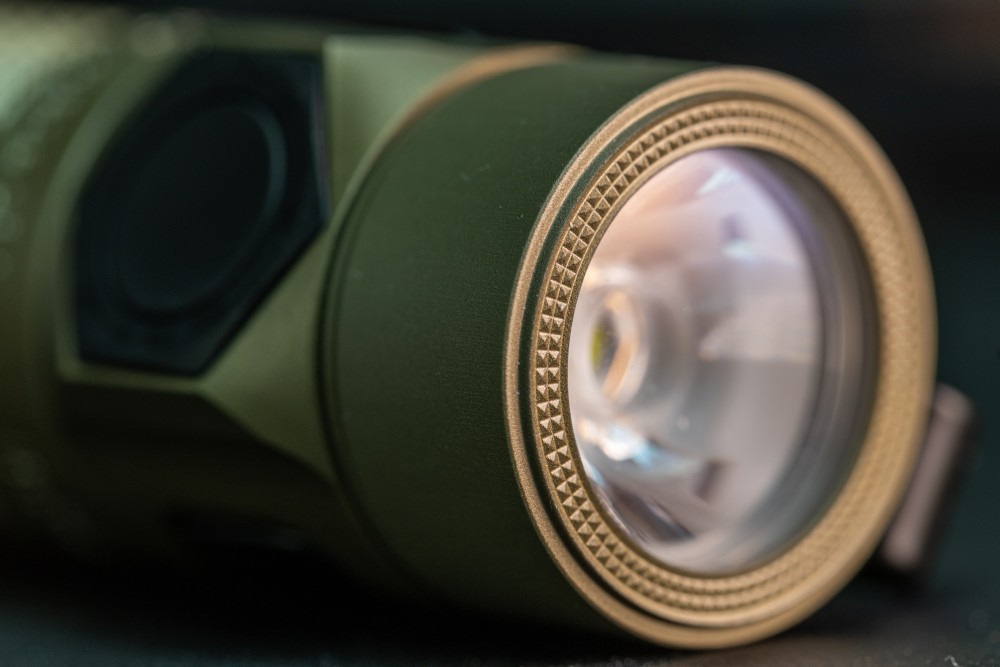
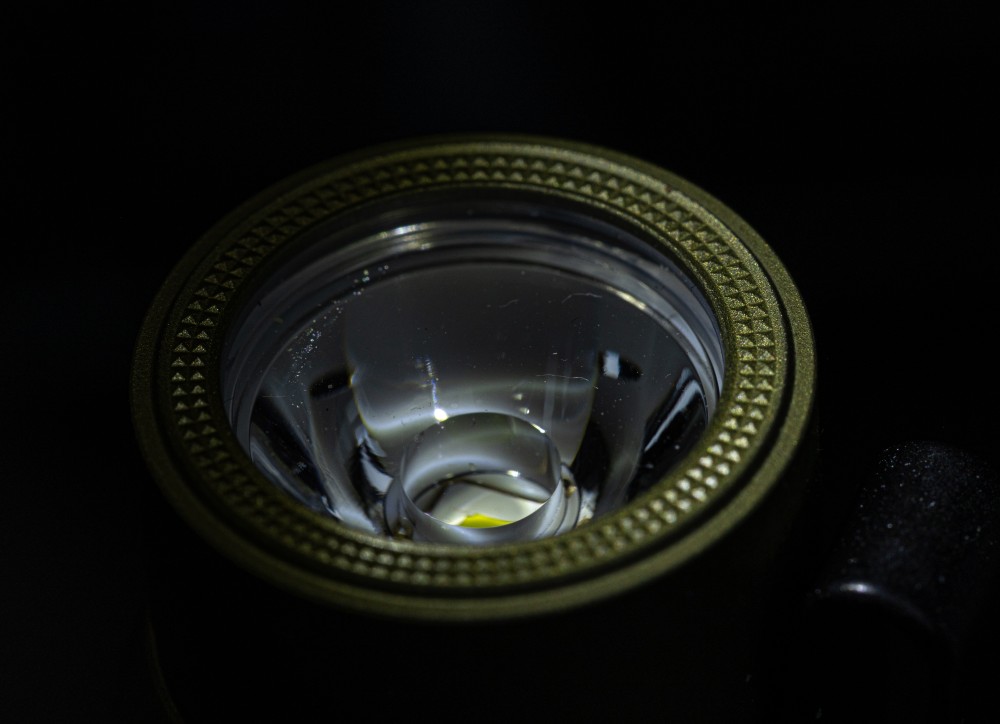
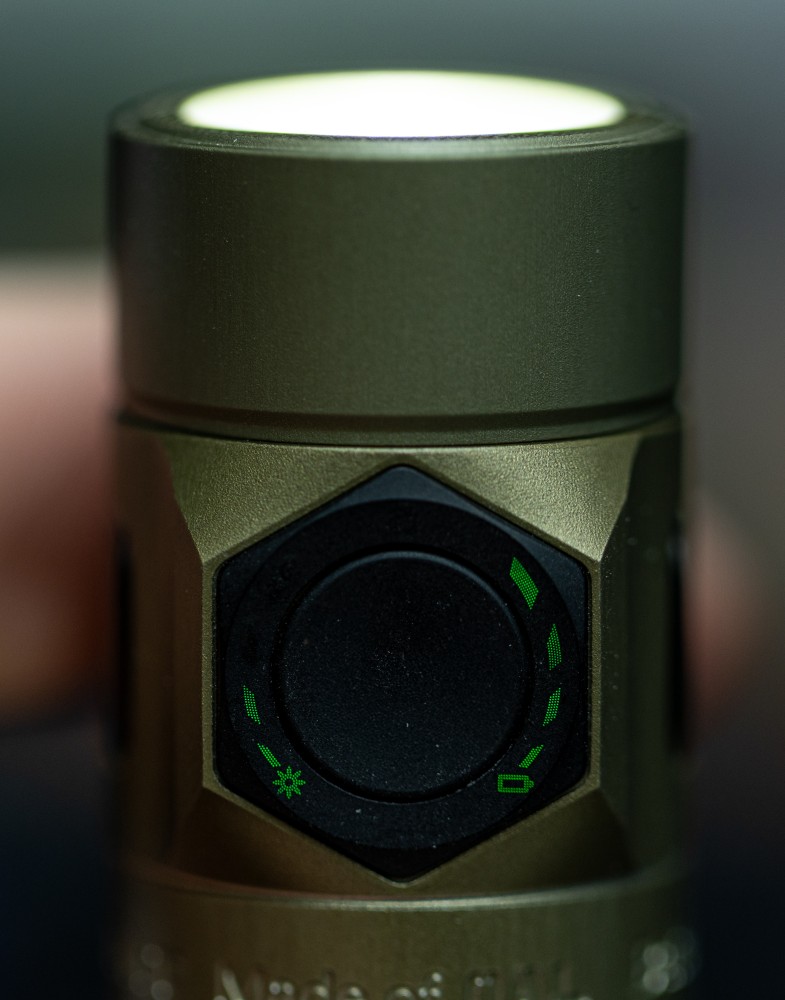
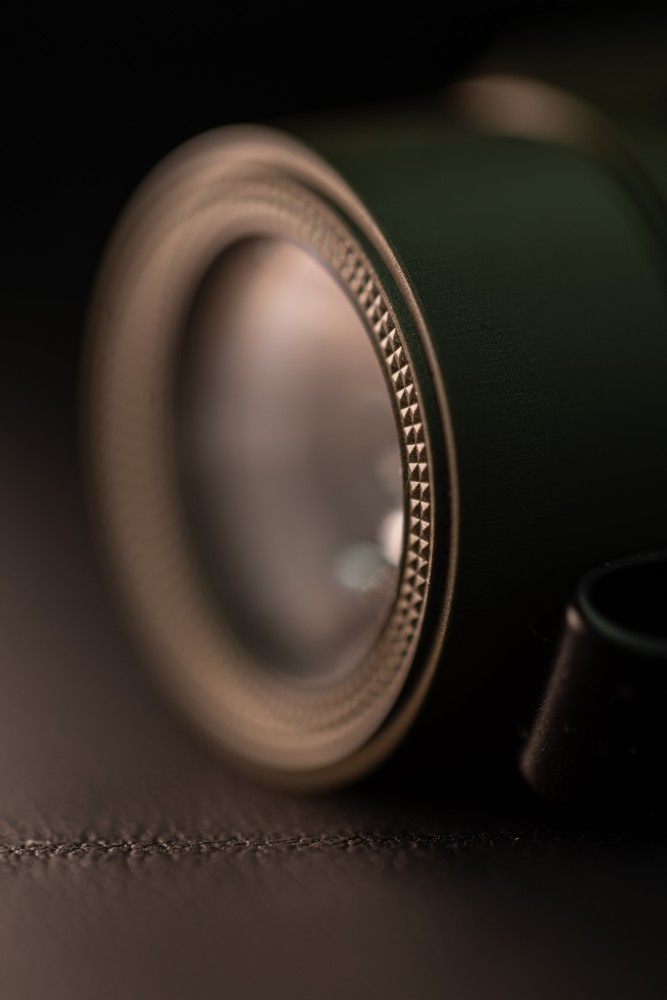
One clear criticism of my unit, however, is the color in the front area of the flashlight. The ring above the switch, or around the head of the flashlight, is visibly lighter than the rest of the body. On my Olive Green version, this is clearly noticeable. I have seen that some units have this color difference while others apparently do not. This seems to be a batch or manufacturing variation. Other users do not have this problem, and the photos in the shop do not show this difference either.
Technically, this does not affect the flashlight, but visually it bothers me quite a lot on a premium product costing around 120 euros.
—
Size and everyday usability
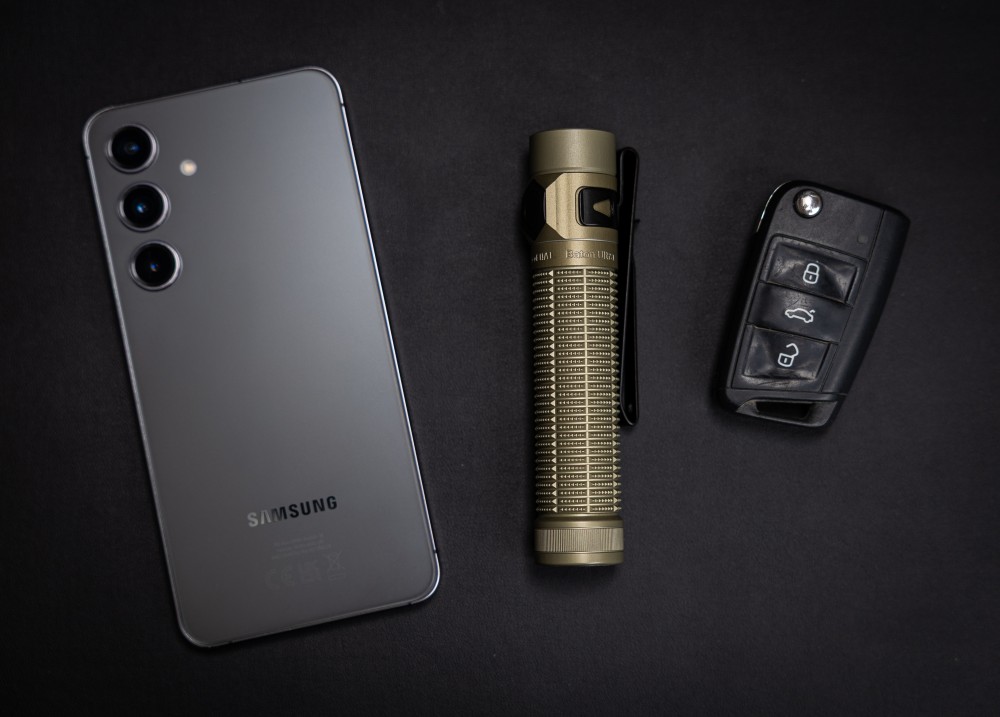
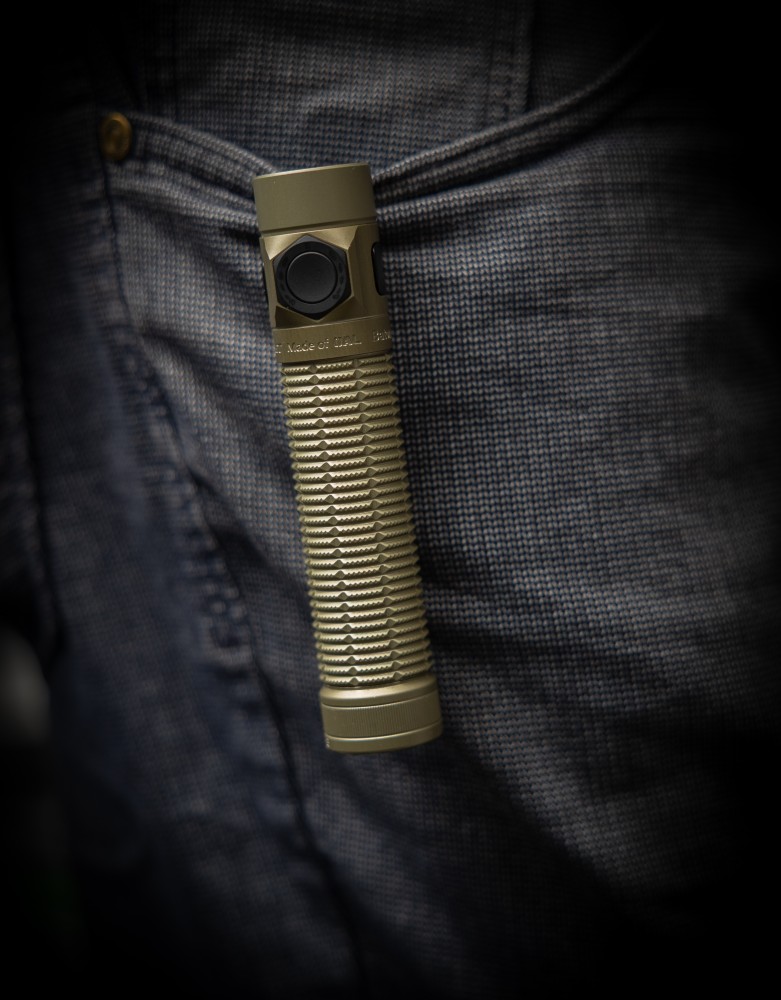
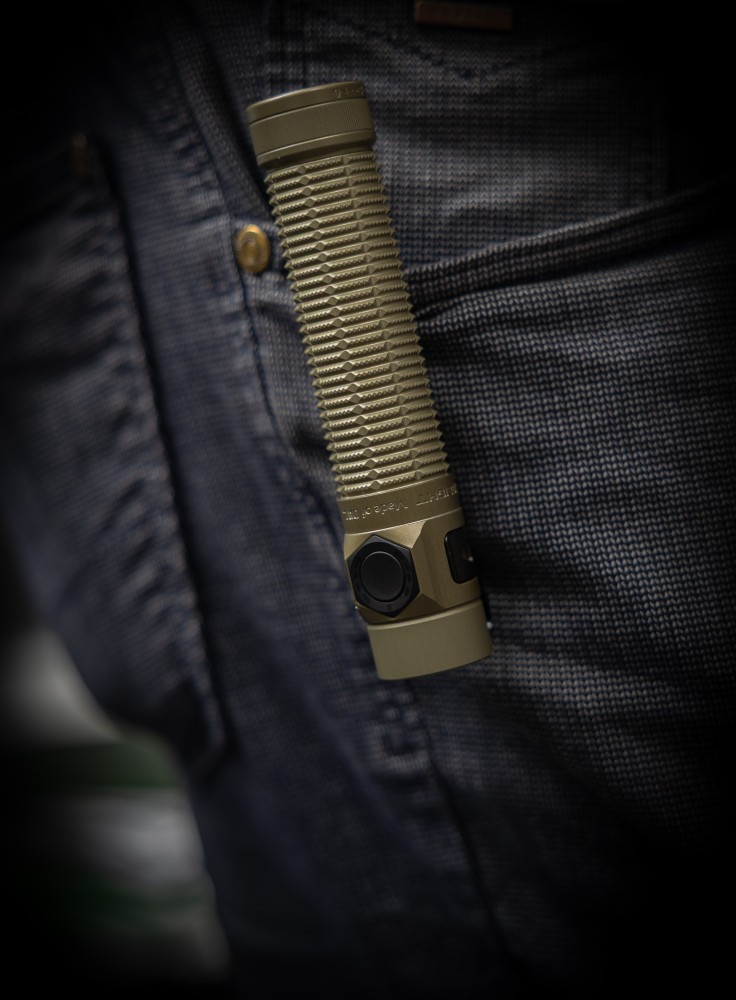
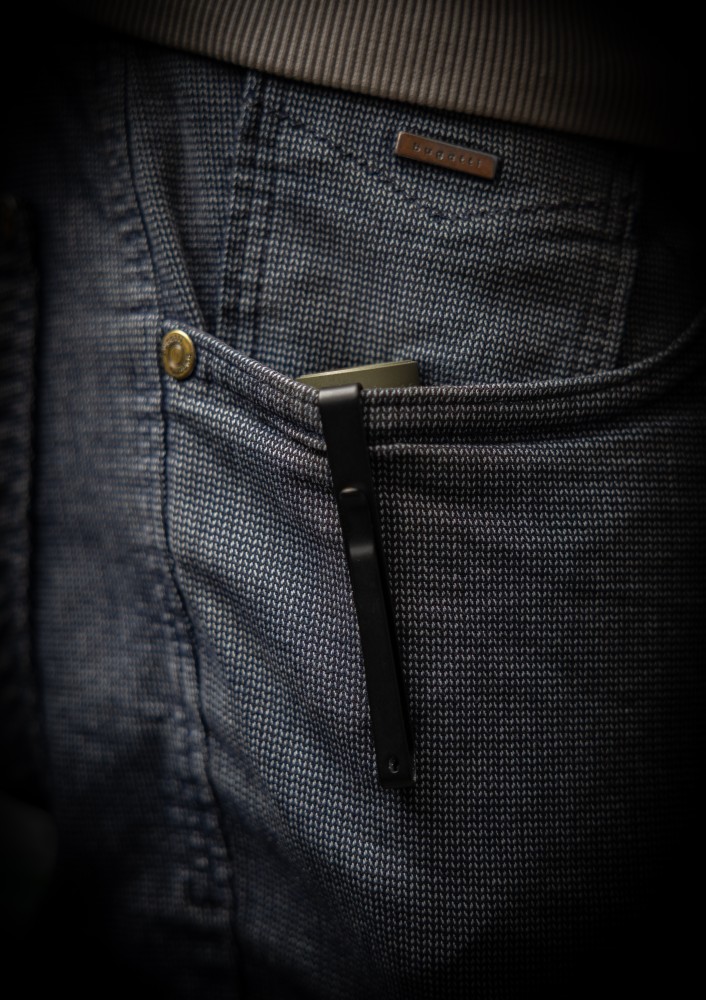
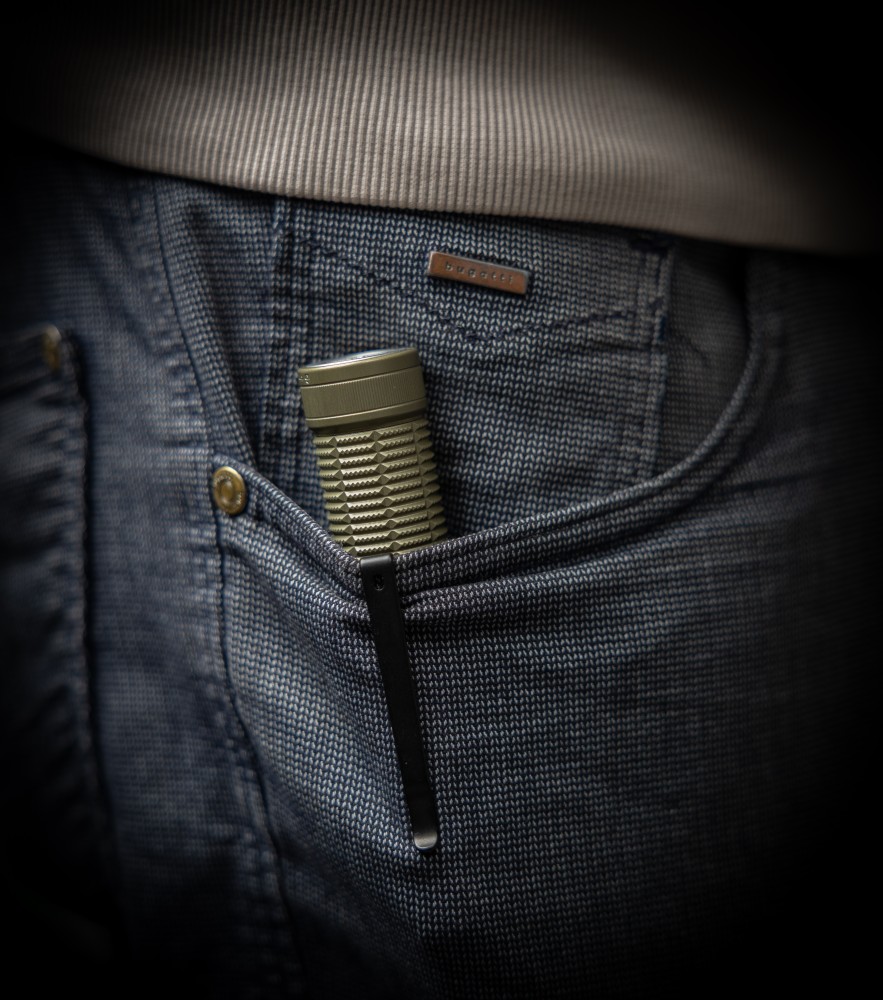
The size is very well chosen for EDC use. The flashlight fits in the palm of the hand and easily into a trouser pocket. It is small and light enough to take with you when needed, but at the same time robust enough for home, garden, walks or travel.
The clip is long, strong and practical. I also like that it can be used in both directions, meaning the LED can face either up or down. This makes the flashlight more flexible depending on whether you want to attach it to a pocket, backpack or other gear.
Another practical feature is that the tail switch is magnetic. This allows the flashlight to be attached vertically or horizontally to magnetic metal surfaces. The magnet is strong enough to hold the flashlight securely in all positions.
Since I do not need a flashlight every day, I personally would not carry the Baton Ultra in my pocket all the time. I would rather keep it at home and take it with me when needed. For someone who regularly goes outside at night, for example with a dog, this is different. For that kind of use, it has exactly the right size and weight. If you go out in the evening, it quickly and discreetly disappears into your pocket.
—
Operation and setup
There is no classic setup in the sense of app connection or complicated installation. With the Baton Ultra, it is simply: unpack, charge, use.
Since I already know Olight flashlights, the operation was immediately understandable to me. With the manual, it should also be easy for new users to understand quickly.
When the flashlight is off, pressing the side switch for one second activates Moonlight mode. This mode has a very low brightness of less than 1 lumen and a theoretical runtime of 100 days. It is useful for reading without glare and for preserving night vision.
Holding the switch cycles through Low, Medium and High. Turbo mode is activated with a double click. Strobe mode is activated with three clicks.
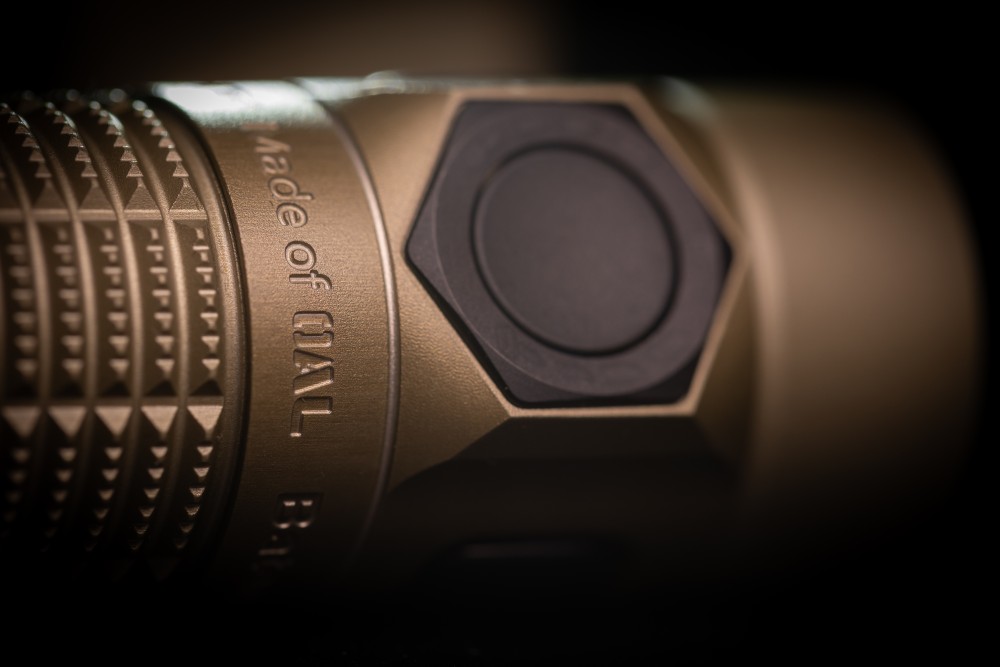
Alternatively, the tail switch can be used. Pressing it once activates High mode, pressing it twice activates Turbo. Holding the switch activates the flashlight temporarily; as soon as you release it, the light turns off again. The flashlight can also be locked to prevent accidental activation.
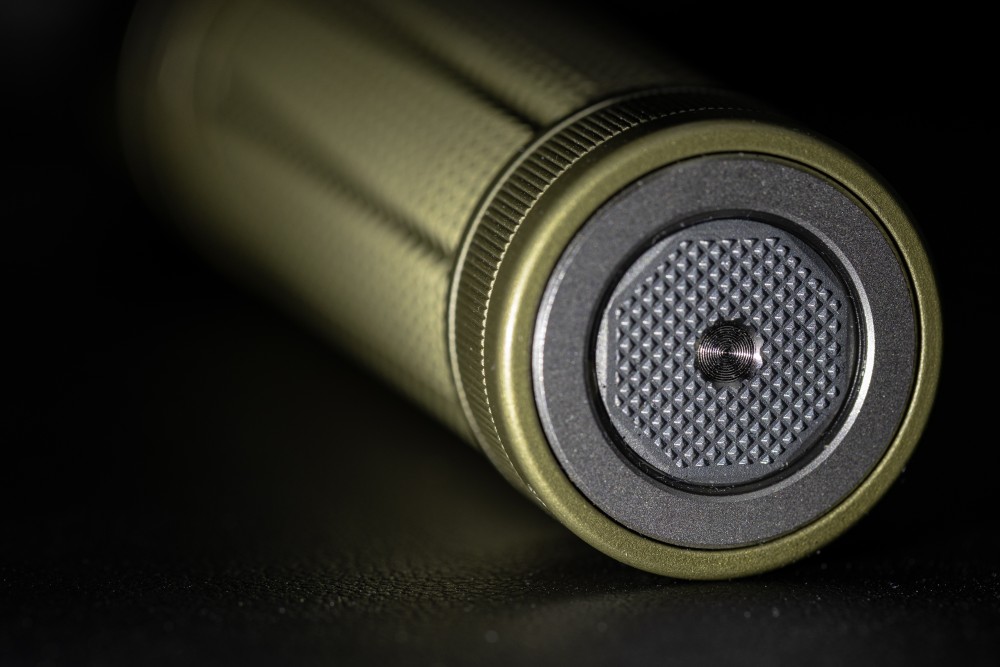
I like the dual-switch concept. You have both the side switch and the tail switch and can choose whichever is more practical depending on the situation. The side switch is good for normal everyday operation, while the tail switch is useful when you want to activate the flashlight quickly and directly. The modes switched reliably, and I did not experience accidental activations or problems during my test. Overall, the operation feels well thought out and reliable.
I also really like the indicators in the side switch. They show the brightness level and battery status. What makes this detail feel especially premium is that the indicators are integrated into the material through laser perforation and only become visible when illuminated during switching on or off. When the flashlight is off, the design stays very clean. It is a small detail, but it makes the flashlight more practical in everyday use and supports the overall premium feel.
—
Light output and beam
For its size and weight, the Baton Ultra offers very strong brightness. The Turbo mode is of course the most impressive, even though it was not an absolute “wow” moment for me personally, because I already know and own larger and brighter Olight flashlights. For such a compact EDC flashlight, however, the performance is definitely impressively strong.
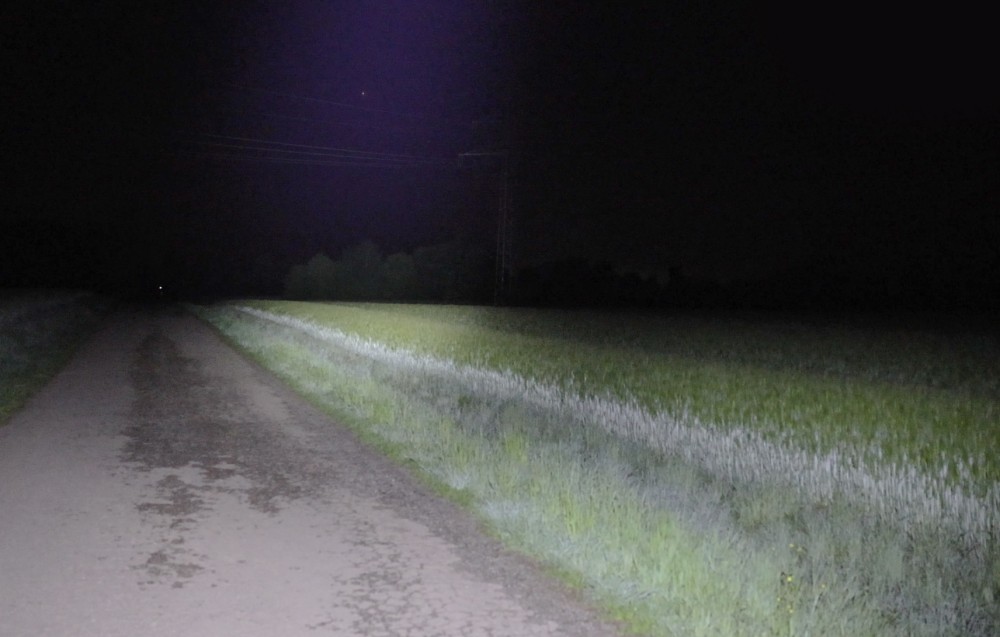
I like the beam pattern. The flashlight offers a good mix of strong throw and wide illumination. When walking on field paths or in the forest at night, this is very practical because you do not only see a narrow spot, but also the surrounding area. The beam looks clean, without any distracting artifacts. The spot is clean and round.
I find the light color pleasantly natural and not unpleasantly cold. The in-house EIP 1 LED does a good job here.
The EIP 1 produces a pure white beam. According to the manufacturer, it has a very low Duv value of less than 0.006. This means it is free from distracting color shifts while also achieving industry-leading efficiency of 134 lumens per watt at 14.5 W.
Source: Olight.com
I could not find any official information about the exact color temperature, but I would assume it is neutral white. Most importantly: for everyday use, walks and dark paths, the light feels very usable and pleasant.
Here is a video with the different modes in total darkness:
Baton Ultra Night Beamshots
—
Turbo mode, heat and runtime
Turbo mode is powerful, but clearly limited in time. After around 1.5 minutes, the flashlight steps down. This is understandable for this body size, both to protect the battery and to limit heat, but I still find it a bit unfortunate. Since Turbo is the most impressive mode, I would naturally like to use it for longer.
On the positive side, the step-down does not feel abrupt. In normal use, it is not extremely noticeable because it happens gradually. After stepping down, the flashlight still remains usefully bright in High mode with 600 lumens.
When it comes to heat, you can clearly feel that there is a lot of power in such a small body. In the lower grip area, I did not feel anything disturbing while holding it. At the head, however, the flashlight naturally gets very hot. If the light beam comes close to the skin, you can immediately feel the heat very strongly. This was not a problem for me during normal use, but it clearly shows why the flashlight cannot run at maximum output permanently.
The lockout function is therefore also very useful. If the flashlight were to turn on inside a pocket, for example in High mode, it could probably burn a hole into fabric.
The battery life feels good in everyday use, but I did not measure it with a stopwatch. So I would deliberately not call this an exact runtime test.
Olight lists the following runtime values:
Turbo: 1.5 minutes
High: 200 minutes
Medium: 18 hours
Low: 155 hours
Moonlight: 100 days
Battery capacity: 3500 mAh at 3.6 V
Charging time: 4.5 hours (MCC3) / 3.5 hours (USB-C)
—
Charging and magnetic bracket
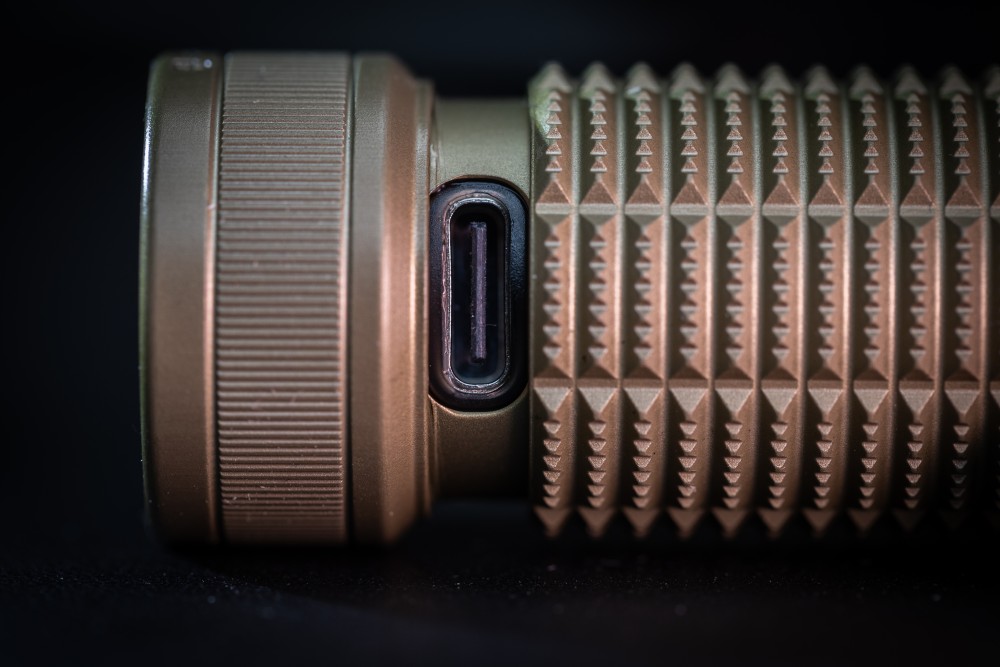
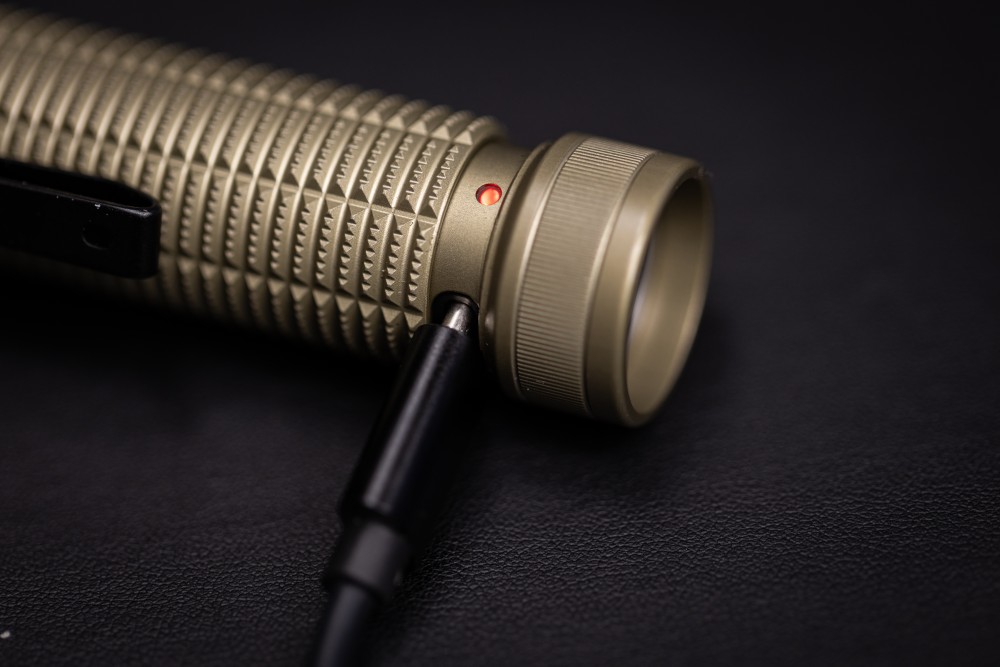
The Baton Ultra offers both magnetic charging through Olight’s own MCC3 connector and USB-C. Personally, I prefer USB-C because I already have these cables everywhere and it is the most universal option while traveling. The flashlight also charges faster via USB-C.
The solution is well made: by twisting the tailcap, the USB-C port is revealed. This feels cleanly integrated and not cheap.
The magnetic charging cable is still practical, especially if you already use Olight products. I have not really used the magnetic bracket in everyday life yet. However, I can imagine it being very useful in a basement, car, near a fuse box or at another fixed location in the house. During a power outage, you would not have to search for the flashlight because it would have a fixed place. For me, the Baton Ultra could therefore get a permanent place in the hallway.
—
Use in different scenarios
For walks, travel, home and garden, I see the Baton Ultra as very suitable. It is especially interesting for people who regularly go outside in the dark, such as dog owners. It is small and light enough not to be annoying, but bright enough to reliably illuminate paths, driveways, gardens or dark corners.
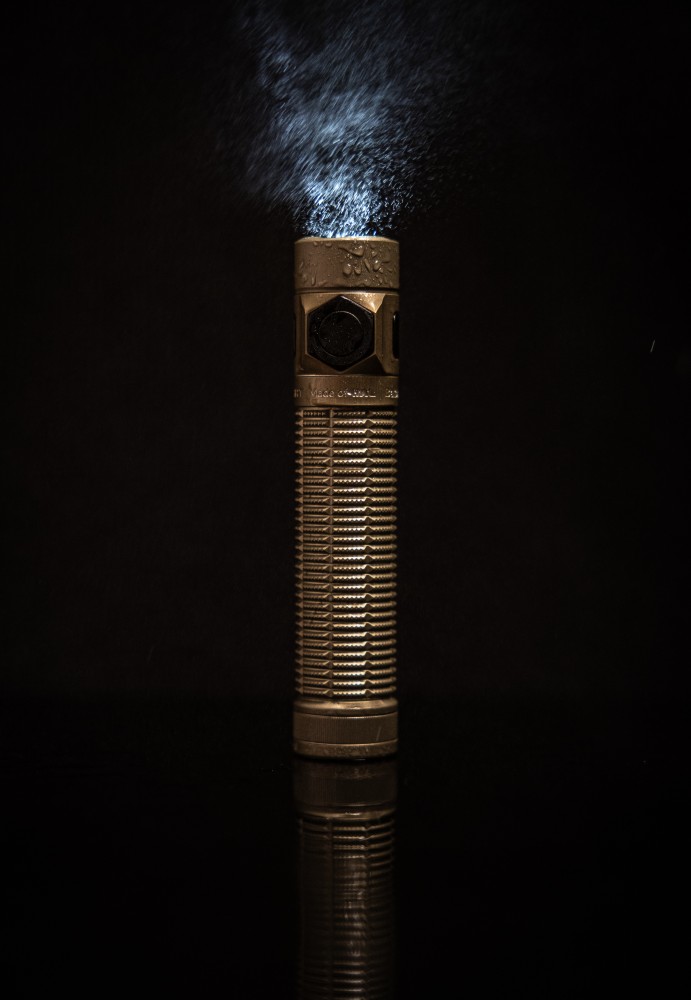
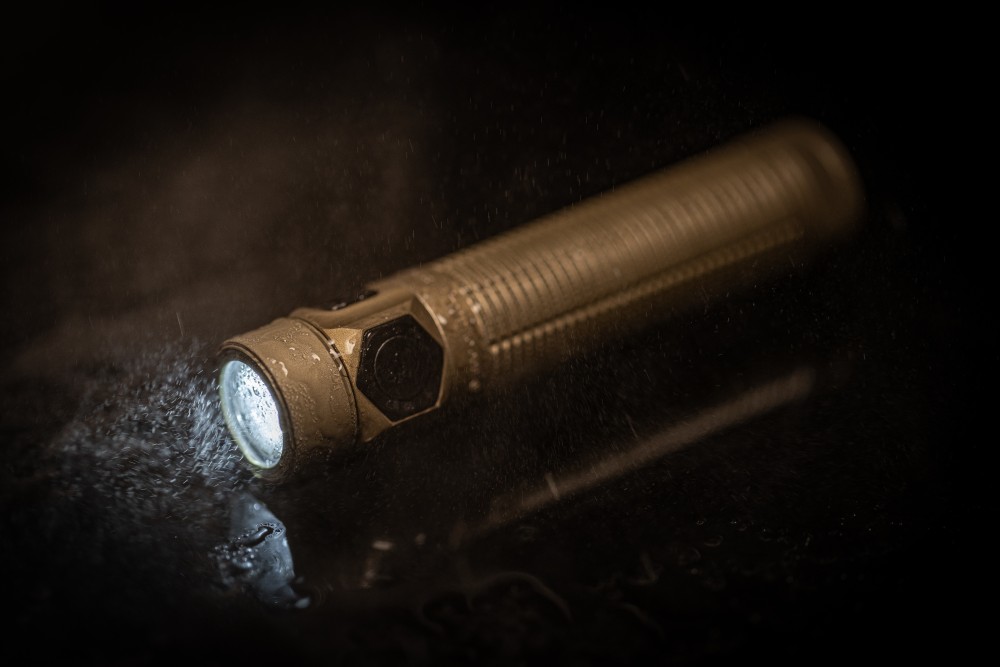
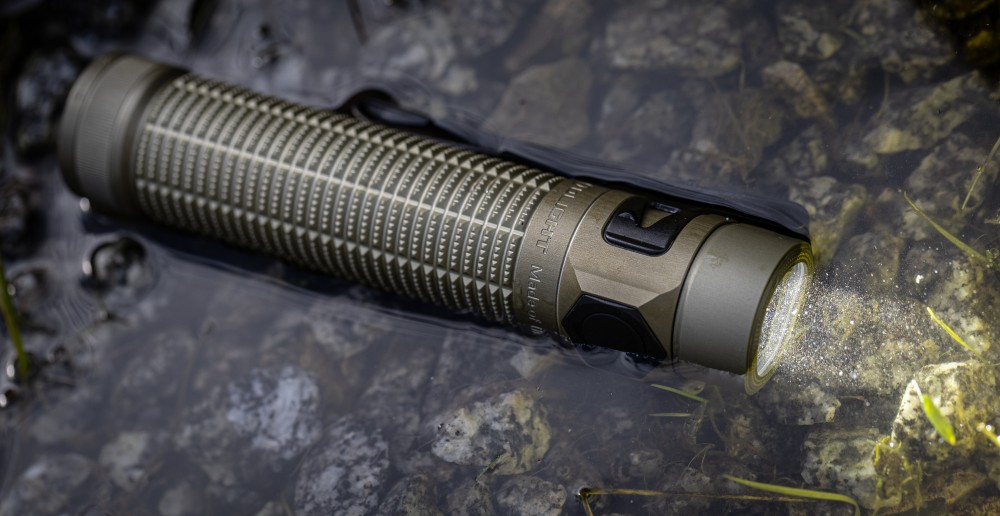
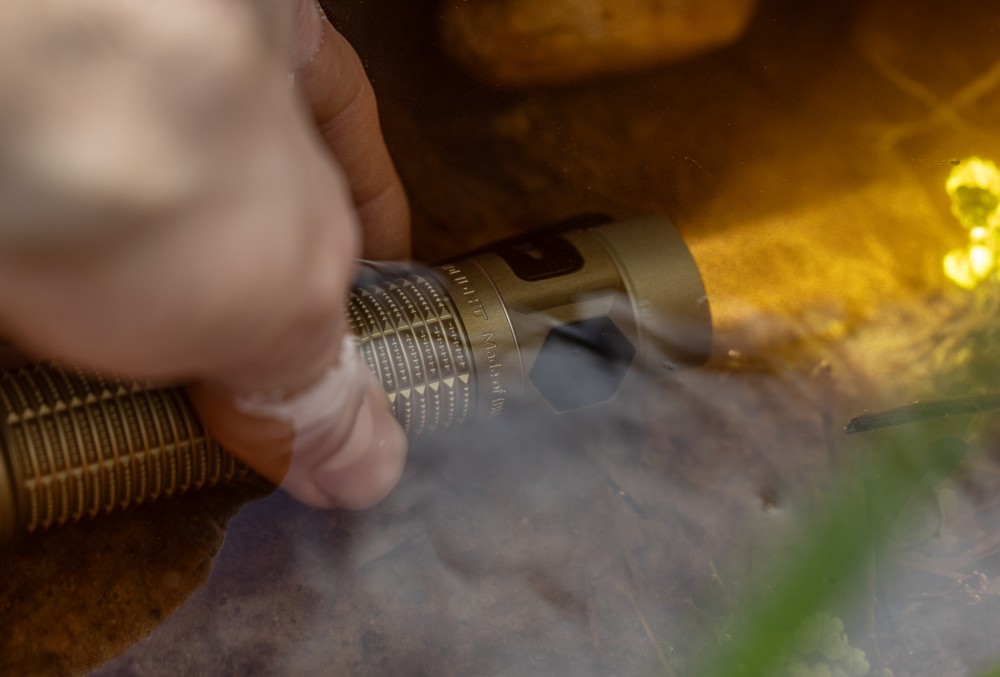
I can also imagine it working very well for camping. When camping, you want to save space and weight, and that is exactly what the Baton Ultra does. With IPX8, it is also not just resistant to rain, but protected against submersion according to the manufacturer’s specifications.
Compared to larger flashlights like my Olight Warrior Ultra, it is of course less powerful, but much more compact and lighter.
For my photography, I see it as less suitable. At first, I thought it might be interesting as a creative light source, but the beam is too strong and creates hard shadows. For classic product photos, portraits or controlled lighting, I need more diffuse light sources. It could be used for light painting or very specific effects, but that would not be a main selling point for me.
—
Likes
What I especially like:
very high-quality packaging and presentation
compact size and low weight
feels good and secure in the hand
strong light output for this size
good beam pattern with a useful mix of throw and spill
pleasant light color
very good build quality
scratch-resistant and premium-feeling OAL material
practical, strong and reversible clip
useful dual-switch concept
USB-C plus magnetic charging
—
Dislikes
What I like less:
visible color difference on the front ring of my unit
price of around 120 euros is quite high in my opinion
Turbo mode is impressive, but clearly limited in time
only partly suitable for photography because the beam creates hard shadows
magnetic bracket is currently more optional than necessary for me personally
—
Suggestions for improvement
The most important point for me would be more consistent color and material quality. On a premium product, the flashlight head should visually match the rest of the body. Especially with a special color like Olive Green, a color difference is clearly noticeable.
It would also be nice if Turbo mode could be maintained a little longer, or if the communication about the step-down were even clearer. Technically, the step-down is understandable for this size, but from a user’s perspective it is still something you should know about.
The advertised 1800 lumens are rarely usable in real life for more than a short time. Of course, this is also the case with many other manufacturers.
Regarding the magnetic bracket, Olight could perhaps show more clearly which scenarios it is intended for. I believe that for many customers, the bracket may never leave the box, even though it could actually be very useful in a basement, garage, workshop or car.
—
Price evaluation
At around 120 euros, I clearly see the Baton Ultra in the premium segment. The quality, performance and build quality basically justify this positioning. However, the price would personally be too high for me if I had to buy it myself. For that money, I would rather choose an ArkPro because it feels more versatile to me personally.
If you do not care about the scratch-resistant OAL material and can accept 200 lumens less output and 100 m less throw, the regular Baton 4 is an option at 84 euros, which is significantly cheaper.
That does not mean the Baton Ultra is badly priced. For users who are looking exactly for a compact, robust, bright and premium EDC flashlight, the price can be acceptable. For me personally, however, it is right at the limit.
Tip: Olight regularly has sales. So it will probably be possible to get the Baton Ultra at a lower price in the future.
—
Conclusion
The Olight Baton Ultra is a very good compact EDC flashlight with high-quality build, strong output, good operation and practical charging options. It feels premium, sits well in the hand and offers impressive performance for its size.
My biggest criticism is the visible color difference on the front ring of my unit. On a product in this price range, this bothers me quite a bit, even though it does not affect functionality. In addition, there is the relatively high price and the time-limited Turbo mode.
Nevertheless, the flashlight performs very well in everyday use. For walks, travel, home, garden or dog owners, it is very well suited. It is small, light, robust and bright enough for real everyday situations. Anyone looking for a high-quality EDC flashlight and willing to pay the premium price gets a strong product with the Baton Ultra.
My rating: 4 out of 5 stars.
If you came down here, thank you for reading! Did take some time to create this :)
Have a nice day!
Andreas
—
Disclosure: I received the Olight Baton Ultra for free as part of the Heyup Tryout program. My review is based on my own experiences and impressions.
