SoC Efficiency vs Battery Size — What Really Matters?
Smartphone users often blame battery size when their phone struggles to last a full day. The logic feels simple: bigger battery = better battery life. In reality, endurance is far more complex. Many phones with massive batteries still drain quickly, while others with modest capacities last surprisingly long.
So what actually kills smartphone battery life? And between SoC efficiency and battery size, which one truly matters more?
Let’s break it down properly.
Common Battery Drain Myths (And Why They’re Wrong)
Myth 1: “Background apps are the main battery killer”
Modern mobile operating systems aggressively manage background processes. On Android and iOS, apps that aren’t actively in use are suspended, restricted, or killed entirely. Unless an app is poorly coded or has persistent background permissions (like navigation or VPNs), it has minimal impact on battery life.
Reality:
Idle drain is usually caused by system-level processes, poor radio optimization, or inefficient hardware — not random apps sitting in RAM.
Myth 2: “Closing apps saves battery”
Force-closing apps often does the opposite. Reopening an app from scratch consumes more power than resuming it from memory.
Reality:
Excessive app killing increases CPU spikes, storage access, and power draw.
Myth 3: “Fast charging ruins battery life quickly”
Fast charging does generate more heat, but modern charging systems dynamically adjust voltage and current to protect battery health.
Reality:
Heat is the enemy — not fast charging itself. Poor thermal design is the real issue.
What Actually Drains Smartphone Batteries
1. Display Technology and Brightness
The display is the largest power consumer in any smartphone.
OLED panels draw power per pixel
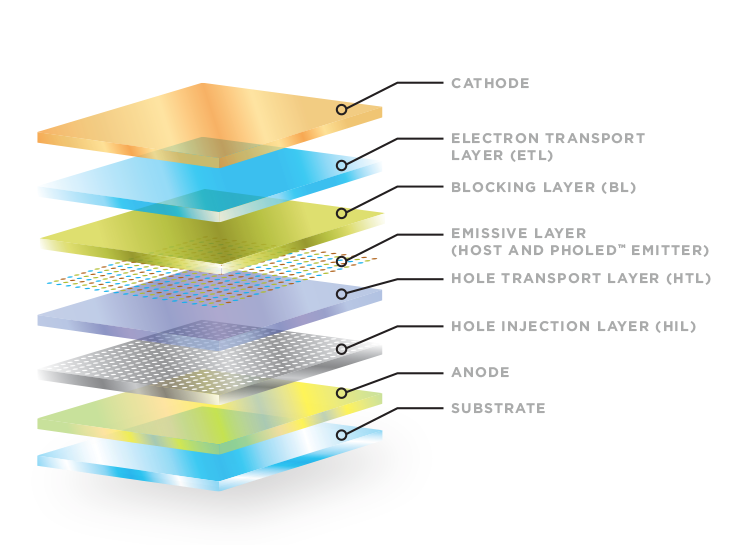
High brightness = exponential power increase
High refresh rates (120Hz–144Hz) increase GPU workload
A poorly optimized display can drain a battery faster than any app or background process.
2. Network Radios (The Silent Killer)
Cellular radios consume enormous power, especially when signal strength is weak.
5G (especially sub-6GHz and mmWave) is power-hungry
Constant handovers between towers increase drain
Dual SIM setups double radio management overhead
This is why phones drain faster in low-signal environments.
3. Heat and Thermal Inefficiency
Heat increases electrical resistance and accelerates energy loss.
Inefficient chip designs generate more heat
Poor internal cooling forces throttling
Throttling causes performance spikes → more power usage
Once a phone heats up, battery efficiency drops sharply.
SoC Efficiency vs Battery Size: The Real Debate
Why Battery Size Alone Is Misleading
Battery capacity is measured in milliamp-hours (mAh), but mAh does not equal endurance.
Two phones can have:
Same battery size
Same display resolution
Completely different battery life
The difference lies in how efficiently power is used.
What SoC Efficiency Really Means
An SoC (System on a Chip) controls:
CPU cores
GPU
AI engine
Image processing
Modem
Power management
A modern efficient SoC:
Completes tasks faster
Returns to idle sooner
Uses less power per operation
This is why newer mid-range chips often outperform older flagships in battery life.
Example Scenario (Real-World Logic)
Phone A: 6,000mAh battery + inefficient SoC
Phone B: 4,800mAh battery + highly efficient SoC
Phone B often lasts longer because:
Lower idle drain
Better modem efficiency
Smarter workload scheduling
Efficiency beats brute capacity.
The Role of Manufacturing Process
Chip fabrication nodes matter more than marketing suggests.
Smaller nodes = lower voltage requirements
Lower voltage = less heat
Less heat = higher efficiency
However, architecture matters just as much as node size. A poorly designed 4nm chip can still drain faster than a well-optimized 6nm one.
Software Optimization: The Hidden Multiplier
Software determines how hardware behaves.
Poor scheduling causes unnecessary wake-ups
Aggressive background syncing kills standby time
Bad thermal policies lead to power spikes
This is why two phones with identical hardware can have very different endurance depending on software tuning.
So What Matters More?
Short answer: SoC efficiency
Long answer: Efficiency + software + display optimization
Battery size helps, but only after efficiency is handled properly. A large battery compensates for inefficiency — it doesn’t fix it.
Final Takeaway
Smartphone battery life isn’t dying because batteries are too small. It suffers because of:
Inefficient SoCs
Poor modem optimization
Power-hungry displays
Weak thermal management
Bad software decisions
The future of smartphone endurance isn’t bigger batteries — it’s smarter power usage.
